REVIEW · TAIPEI CITY
Taipei: Old Town Walking Tour
Book on GetYourGuide →Operated by TourMeAway · Bookable on GetYourGuide
Taipei’s past walks right beside you. In 2.5 hours, this Taipei Old Town walking tour strings together major landmarks, street-level history, and a stop in Ximending so the city feels like one story, not a pile of buildings.
I love how the route connects what you see with what happened, especially the 228 Peace Memorial Park and the guide’s explanation of the 228 tragedy. I also love the contrast: grand architecture like the Presidential Office, then down to markets and shopping streets, with English-speaking guides such as Leo, Vincent, and Ale known for keeping the pace energetic and the facts clear.
One possible drawback: it’s a brisk walk. If you want to linger a long time at any single stop or browse Ximending for hours, plan extra time on your own.
In This Review
- Key Things You Should Know Before You Go
- Entering Taipei’s Old Town: Why This 2.5-Hour Route Works
- Where the Tour Starts: NTU Hospital Station Exit 4
- The Big Moment: 228 Peace Memorial Park and Taiwan’s Turning Points
- National Museum of Taiwan: A Short Stop That Adds Real Context
- Presidential Office: Spotting Architecture with Meaning
- Zhongshan Hall: From Public Auditorium to Modern Landmark
- Ximending Markets: Souvenirs, Street Energy, and a Local-Friendly Ending
- The Octagonal Red House: Why This Building Is a Perfect Finale
- Your Guide Makes It Click: Energy, Facts, and Q&A Style
- Price and Value: Is $1.10 a Real Bargain?
- Who Should Book This Walking Tour (and Who Might Skip It)
- Quick Practical Notes for a Smoother Walk
- Should You Book This Taipei Old Town Walking Tour?
- FAQ
- How long is the Taipei Old Town Walking Tour?
- What is the price per person?
- Where does the tour meet?
- What landmarks are included on the route?
- Does the tour include 228 history?
- Is the tour guided in English?
- Is the tour wheelchair accessible?
- Are private groups available?
- Can I cancel for a full refund?
- Is there a reserve and pay later option?
Key Things You Should Know Before You Go
- 228 Peace Memorial Park context: You’ll get the story behind one of Taiwan’s most important and painful chapters.
- Zhongshan Hall on foot: Former public auditorium history makes the building feel more than just a landmark.
- National Museum of Taiwan stop: A short break that helps you understand the surrounding old-town streets.
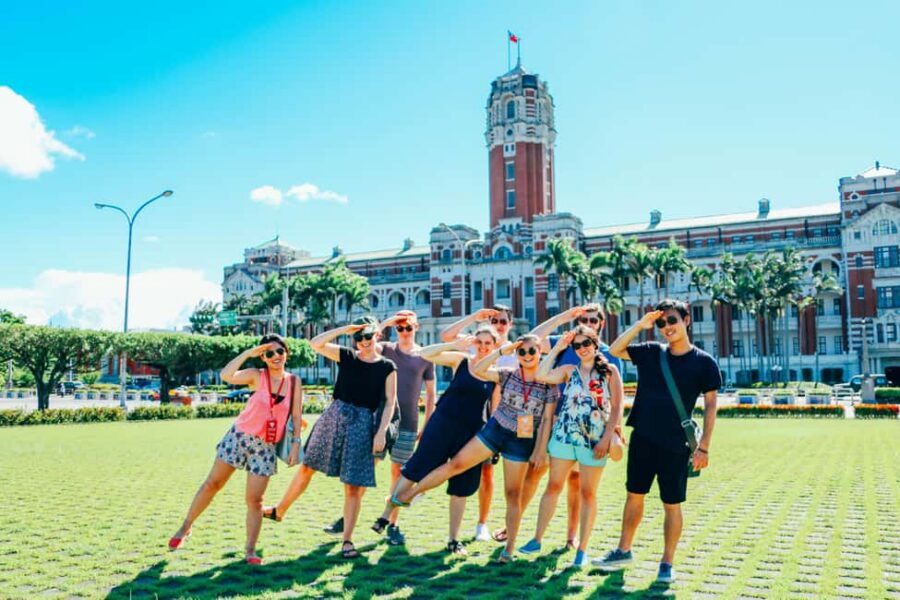
- Presidential Office architecture: You’ll see a major symbol of modern Taipei while still walking through the older city fabric.
- Ximending markets + souvenir streets: You end with lively shopping energy right where locals and visitors mingle.
- Octagonal Red House finish: A distinct red-brick building that ties the walk back to early public market life.
Entering Taipei’s Old Town: Why This 2.5-Hour Route Works
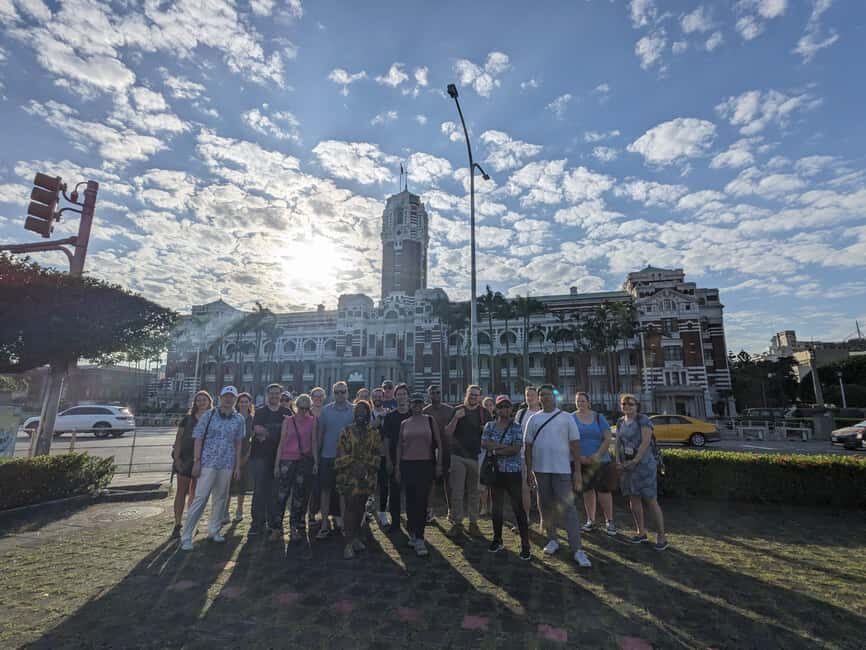
This tour works because it doesn’t treat Taipei like a museum map. You walk through a stretch of the city where eras overlap: older civic spaces, modern political landmarks, and then street-level commerce in Ximending. That mix helps you understand why Taipei feels both traditional and fast-moving.
You also get a strong history thread. You’re not just told names and dates. The guide frames what you’re seeing as a response to Taiwan’s changing politics and society. In a single afternoon, you end up with a better mental map for the whole island.
You can also read our reviews of more walking tours in Taipei City


Where the Tour Starts: NTU Hospital Station Exit 4

Start at Taipei Metro NTU Hospital Station Exit 4 at street level. This is convenient if you’re already based near central Taipei, and it’s a straightforward meeting spot to find without multiple transfers.
A practical tip: arrive a few minutes early. Old Town streets can be confusing if you’re matching street signs while walking. Once you find the group, the guide takes over from there and you won’t be stuck playing guessing games.
The Big Moment: 228 Peace Memorial Park and Taiwan’s Turning Points
One of the main reasons to do this tour is the way it tackles the 228 tragedy. The walk brings you to 228 Peace Memorial Park, and your guide explains what happened and why it matters. It’s not presented as a random historical fact. The story is framed as a key event that helped shape Taiwan’s later identity and public memory.
This is the kind of stop that changes how you see other buildings. Even if architecture is your favorite travel subject, the park gives you the human and political context that makes civic spaces mean more than just their looks.
If you prefer light sightseeing only, be aware this portion carries emotional weight. Still, the tour’s structure is designed so you can keep moving through the city afterward, rather than getting stuck in one heavy moment.
National Museum of Taiwan: A Short Stop That Adds Real Context
You’ll stop at the National Museum of Taiwan and then ramble through the surrounding historic old-town area with your guide. The museum stop is brief by design. It’s meant to give you anchors: what kind of institution it is, why it sits where it does, and how the area’s history connects to the rest of the route.
The value here is clarity. Instead of wandering the neighborhood without a thread, you get guided context and then you can look around with better questions. You’ll notice details more quickly because you’re not staring at streets with no background.
Presidential Office: Spotting Architecture with Meaning
Next comes a stop by the Presidential Office, known for its architecture. From the outside, it’s the kind of structure that can feel intimidating—big, formal, and very official. The tour helps you look at it without getting lost.
Why this works on foot: you’re not just sightseeing a landmark. You’re walking from older city blocks toward the symbols of governance, and the shift feels intentional. It helps you connect Taipei’s physical layout to its political evolution.
If you like your history visual, you’ll appreciate how the guide points out what makes the building recognizable and why that matters.




Zhongshan Hall: From Public Auditorium to Modern Landmark
A standout on this route is Zhongshan Hall. You’ll walk there to see the building’s role as a historic former public auditorium. The point isn’t only that it’s old. It’s that the building reflects how public life and community gatherings were organized in earlier Taipei.
This stop tends to land well because it bridges eras. When you hear how a civic space used to function, the hall stops being just another landmark photo. You start thinking about who used the space, what it hosted, and how public culture evolved.
Ximending Markets: Souvenirs, Street Energy, and a Local-Friendly Ending
After the civic stops, the tour shifts into Ximending, the famous shopping district. You’ll pass through the city markets where stalls sell souvenirs and all kinds of everyday tourist-friendly items.
This is a smart way to end, because you leave with two kinds of memories: the architecture and the street life. Even if shopping isn’t your top priority, it’s a useful final chapter. You see how Taipei’s historic center connects to modern consumer culture.
If you’re buying gifts, you’ll get a feel for what’s common and what’s worth a second look. For many people, this is also the moment when the tour’s history finally clicks, because you’re in an area that feels alive and constantly in use.
The Octagonal Red House: Why This Building Is a Perfect Finale
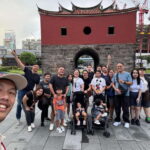
Finally, you arrive at the Red House, a red-brick Western-style building shaped like an octagon. The tour frames it as Taipei’s first public market. That detail matters, because you start understanding the building as an early example of how the city organized public trade and gathering.
As you finish the walk here, the idea is simple: you get a clearer understanding of how Taipei changed into the city it is today. You’re not ending at a random photo spot. You’re ending at a place tied to public life.
It’s also a great capstone for the entire route. The presidential stop represents authority, the memorial represents memory, Zhongshan Hall represents public culture, and the Red House represents everyday commerce. Together, you get a city portrait.
Your Guide Makes It Click: Energy, Facts, and Q&A Style
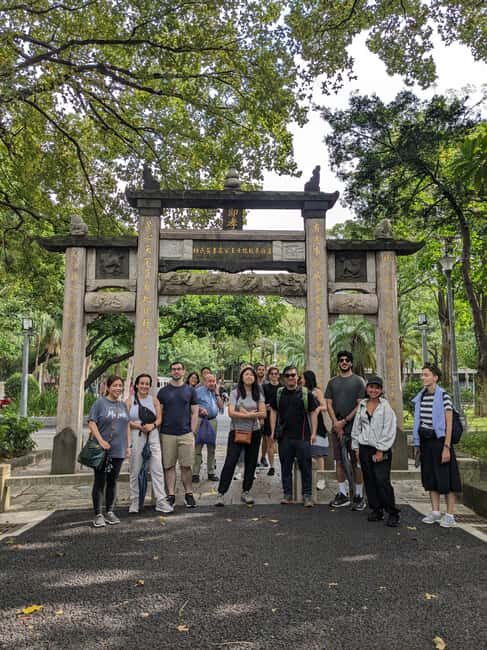
This tour leans heavily on the guide. The English commentary is a big part of the value, and guides like Leo, Vincent, and Ale are highlighted for different strengths.
- Leo is described as passionate and energetic, with a way of keeping the explanation moving.
- Vincent is noted for being a perfect guide, with strong delivery.
- Ale is recognized for a free, easy style that encourages questions and discussion.
So here’s the practical advice: go in curious. If you want a better experience, come ready to ask at least one question about something you notice—an architectural detail, a street layout change, or how an event like the 228 tragedy connects to modern civic life.
Price and Value: Is $1.10 a Real Bargain?
$1.10 per person for a 2.5-hour English walking tour that includes major landmarks is an eye-catching price. The main reason it can make sense is that you’re paying for human guidance, not just transportation or a museum ticket.
You’re getting:
- landmark coverage across different Taipei eras
- a structured explanation of major historical events (including the 228 tragedy)
- a final payoff in Ximending and the Red House
Also, the pricing structure is flexible in practice because the activity offers reserve now & pay later. That’s useful if you’re still shuffling your schedule around weather or transit.
Just keep expectations aligned. This is not a full-day deep-dive into every site. It’s a tight, guided “big picture” walk that helps you understand what you’re looking at.
Who Should Book This Walking Tour (and Who Might Skip It)
This tour is ideal if you:
- want a compact way to learn Taipei’s history while walking
- enjoy mixing politics, civic architecture, and street life
- like having an English guide who can explain context and keep your questions coming
- plan to spend time in central Taipei and want a smart morning or afternoon activity
You might want to skip or pair it with something else if you:
- only want leisure browsing with no heavier historical content
- expect a lot of free time inside museums
- want a food-focused route rather than history and landmark stops
Quick Practical Notes for a Smoother Walk
- Wear comfortable shoes. This is a walking tour through multiple stops in central areas.
- Bring a light layer. Weather can shift, and you’ll be outside for much of the route.
- If you want shopping time in Ximending, treat the tour as your orientation. Then return later with your own plan.
Should You Book This Taipei Old Town Walking Tour?
If you want Taipei to make sense fast, I’d book it. The mix of the 228 Peace Memorial Park story, major civic landmarks like the Presidential Office and Zhongshan Hall, and the practical ending at the Red House and Ximending gives you more than photos. You leave with context you can use all over the city.
Choose it especially if you’re trying to understand Taiwan beyond headline-level facts. The guide-led approach turns the old streets into something you can actually read.
If you’d rather only snack and shop, then this may feel too historical for your taste. But if you enjoy walking, asking questions, and learning what Taipei’s buildings meant to real people, it’s a strong pick.
FAQ
How long is the Taipei Old Town Walking Tour?
The tour lasts 2.5 hours.
What is the price per person?
The price is $1.10 per person.
Where does the tour meet?
The meeting point is at Taipei Metro NTU Hospital Station Exit 4, street level.
What landmarks are included on the route?
Key stops include the Presidential Office, Zhongshan Hall, the Red House, and time at the National Museum of Taiwan, plus the Ximending area.
Does the tour include 228 history?
Yes. The tour includes explanation of the 228 tragedy and a stop connected with 228 Peace Memorial Park.
Is the tour guided in English?
Yes, it’s a live tour guide in English.
Is the tour wheelchair accessible?
Yes, the tour is wheelchair accessible.
Are private groups available?
Yes, private group options are available.
Can I cancel for a full refund?
Free cancellation is available up to 24 hours in advance for a full refund.
Is there a reserve and pay later option?
Yes. You can reserve now and pay later, with pay nothing today.