REVIEW · TAIPEI CITY
Taipei’s Origin & Longshan Temple – Taiwan Cultural Tour
Book on GetYourGuide →Operated by TourMeAway · Bookable on GetYourGuide
Longshan Temple has a way of pulling you in fast. This 2.5-hour, tip-based Taipei cultural tour pairs Taipei’s origins with folk-god stories that explain daily life, luck, and even old ideas about illness. I like the mix of religion and local storytelling in one walk, with the focus on what people actually ask for. One consideration: it includes hands-on-style temple customs like moonstone sharing, so you’ll want to go with a respectful, curious mindset.
What I really appreciate is how the tour turns “sightseeing” into context. You don’t just look at statues and dragons—you learn who the gods are, what they’re believed to handle (from the sea to battles), and why temple visits still matter in modern Taiwan.
The one drawback to plan for is pacing. With only 2.5 hours and multiple stops, you’ll need to keep up on foot—especially if you want time to linger on details before the group moves on.
In This Review
- Key highlights you can count on
- Taipei’s Origins and Longshan Temple in 2.5 Hours
- Why the tip-based format changes the tone
- Meeting at Longshan Temple Station Exit 1 (and how to not lose the group)
- Taipei Origin: How ancestors shaped belief and everyday survival
- Longshan Temple: dragons, folk gods, and why 100+ matter
- Two gods you’ll hear about clearly
- Moonstones and messages from the heavens (how to participate respectfully)
- What “authentic Taiwanese stories” looks like in practice
- Value for $1: what you’re really paying for
- Who should book this tour
- Quick etiquette tips so you get the most out of Longshan
- Should you book Taipei’s Origin & Longshan Temple tour?
- FAQ
- Where does the tour start?
- How long is the Taipei Origin & Longshan Temple tour?
- Is the tour language English?
- What’s included in the price?
- Is the guide tip included in the booking fee?
- What’s the price?
- Is the tour cancellable?
Key highlights you can count on
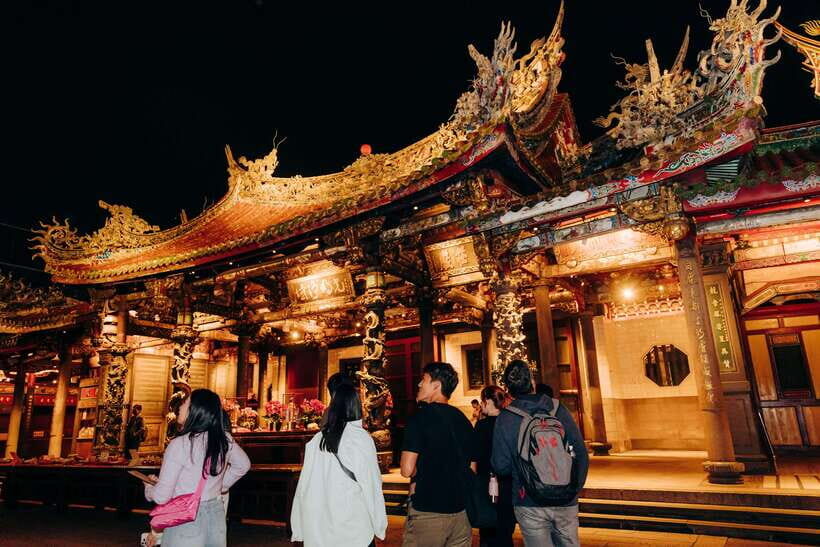
- Longshan Temple folk gods (100+): Learn the roles of deities tied to daily hopes and big moments.
- Moonstones and messages: The guide shows how people throw moonstones and interpret what you’re told.
- Taipei’s origin storytelling: You’ll connect migration and early life in Taiwan to belief and everyday survival.
- Wenchang Dijun and Old Man Under the Moon: Focus on learning luck and matchmaking luck.
- An orange-badge meeting spot: Start at Longshan Temple Station Exit 1 and end right back there.
- Guide enthusiasm that lands: One standout praise singled out Leo’s clear, animated storytelling style.
Taipei’s Origins and Longshan Temple in 2.5 Hours
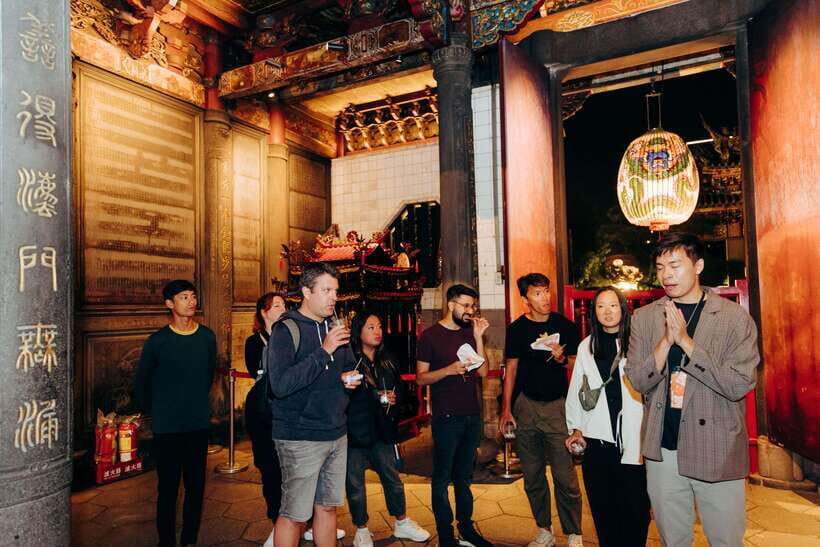
This tour is short enough to fit into a busy Taipei schedule, but it’s not light on meaning. It’s designed as a walking cultural tour that connects Taipei’s beginnings with the religious place most visitors hear about: Longshan Temple.
The best part is that you’re not treated like a passive audience. The guide leads you through stories and belief systems in a way that makes the temple feel like a living part of Taiwanese daily life—not just old architecture. If you’re into street-level culture, ritual, and the “why” behind what you see, this format works.
The route starts and ends at the same place, which is a practical bonus. You meet at Longshan Temple Station Exit 1, find the guide with an orange badge, then return back to that point when the tour wraps.
You can also read our reviews of more historical tours in Taipei City

Why the tip-based format changes the tone
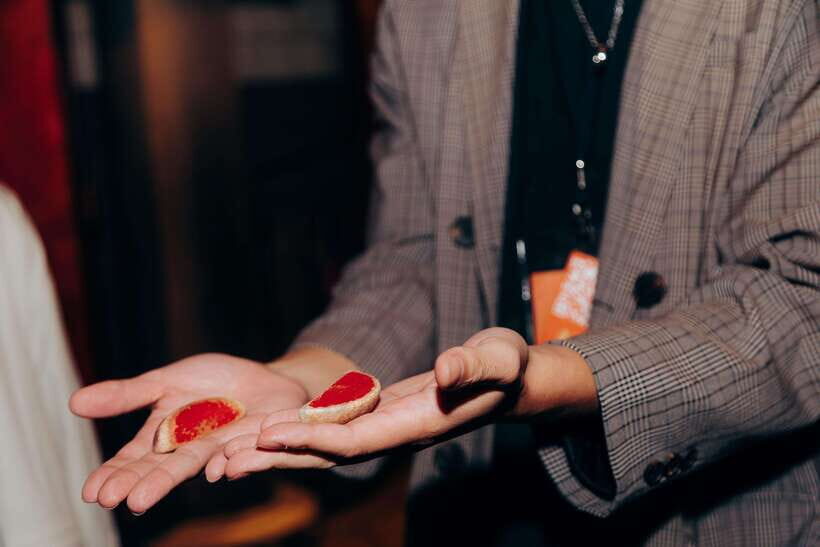
This experience is priced at $1.00 per person, but it’s explicitly a tip-based cultural tour. That usually means the money supports the tour setup while the guide earns through your goodwill—so the guide has a strong incentive to make it personal, clear, and engaging.
You should also know one key detail: the tip to the guide is not included in the booking fee. If you like storytelling tours, bring some cash or figure out how you’ll handle tipping before you meet. It’s the difference between a guide reciting facts and a guide doing what they’re good at—explaining meaning and answering questions.
From the tone of the tour content, this isn’t “look at that, next.” It’s “listen, understand, then watch again with new eyes.”
Meeting at Longshan Temple Station Exit 1 (and how to not lose the group)
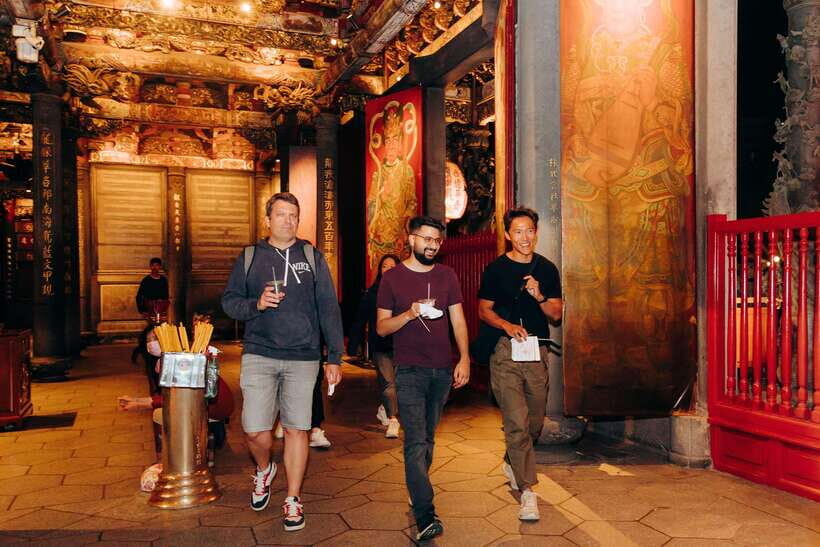
Your start point is very specific: Longshan Temple Station Exit 1. When you arrive, look for the tour guide wearing an orange badge. That simple detail matters, because most temple areas in Taipei can get crowded fast—especially around popular transit stops.
Plan to arrive a bit early. A 2.5-hour tour doesn’t leave much slack if you’re searching for the group at the last second. Once you’re with the guide, you’ll move as a group through the Taipei origin stories and then into Longshan Temple customs.
You’ll also end back at the meeting point. That makes it easy to plan dinner or your next stop without guessing where your group will scatter.
Taipei Origin: How ancestors shaped belief and everyday survival
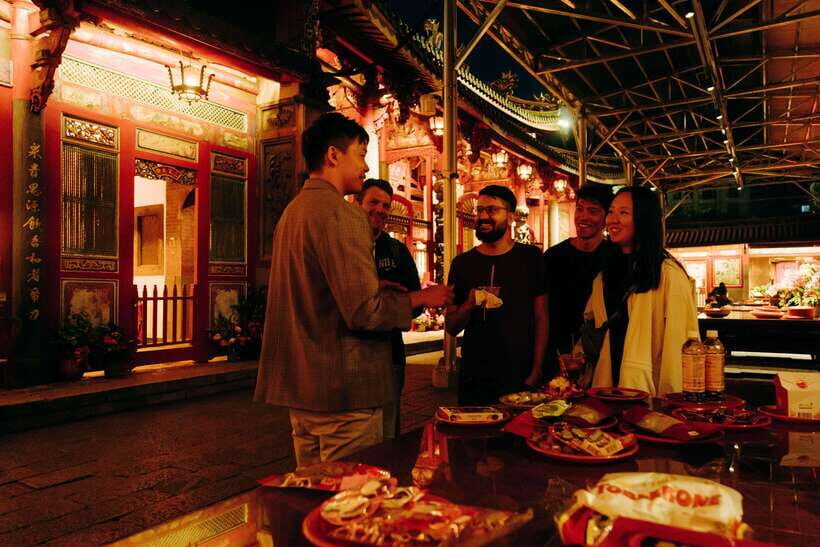
The “Origin” part of the tour sets up the rest. Instead of treating Longshan Temple like a separate world, the guide connects it to how early people lived in Taiwan—how they made sense of illness, luck, danger, and hardship.
One of the most interesting concepts the tour highlights is how ancestors handled illness without doctors in the modern sense. You’ll hear about older approaches to health and how belief systems helped families deal with fear, uncertainty, and healing.
You’ll also learn why folk religion wasn’t only about temples. It was tied to practical concerns. In the tour framing, you start seeing temple deities less like abstract mythology and more like community “helpers” for real problems—storms, travel risk, conflict, and learning.
This is a great stop for anyone who likes culture with an explanation behind it. If you normally skip the “backstory” pieces on tours, this one nudges you to pay attention.
Longshan Temple: dragons, folk gods, and why 100+ matter
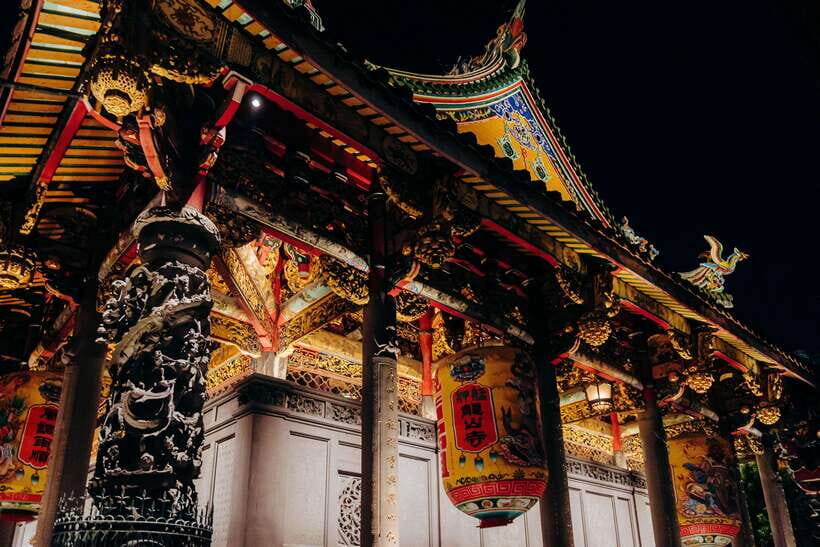
When you step into Longshan Temple, the tour shifts gears into the heart of Taiwan’s folk religious world. The temple is described as full of colorful dragons, and the guide uses the visuals to teach you what people associate with them and what the deities are believed to oversee.
A standout detail is the scale: Longshan Temple is home to over 100 folk gods. That number is more than a fun fact. It tells you why this place feels so important in Taiwanese life—there isn’t one single deity handling everything. People come with different needs, and the temple supports that variety.
The tour also frames the gods broadly across the parts of life that matter most:
- sea and travel risks
- luck and protection
- conflict and battle
- personal hopes tied to learning, love, and timing
If you’ve ever wondered why temple visits aren’t one-size-fits-all, this is where the explanation lands.





Two gods you’ll hear about clearly
The guide points you toward specific deities with roles that people still talk about today:
- Wenchang Dijun, known for helping with learning. If you’re in school, studying, or simply curious about the idea of academic luck, this is the name that makes the tour feel relevant.
- The Old Man Under the Moon, associated with bringing couples together. Even if you’re not looking for matchmaking luck, it’s a neat way to understand how Taiwanese folk beliefs handle relationships.
Moonstones and messages from the heavens (how to participate respectfully)
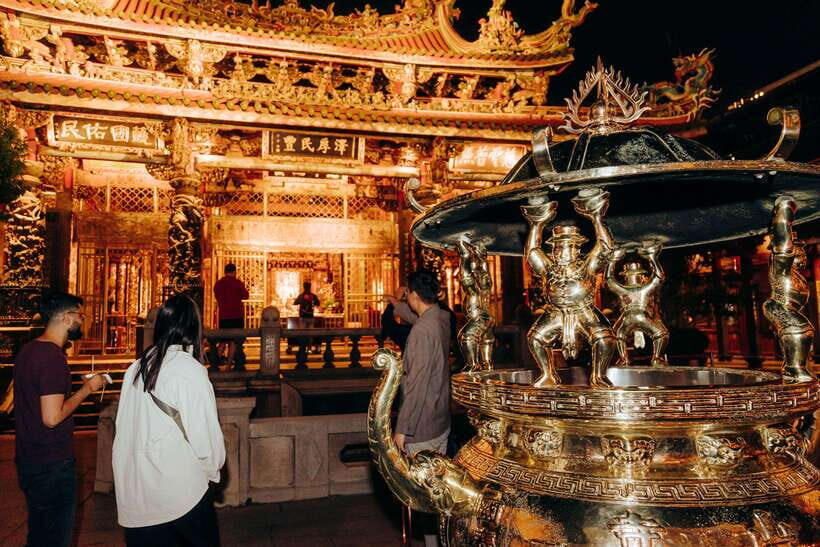
One of the signature activities on this tour is learning the custom of throwing moonstones. The guide shows how to do it and how people interpret the messages you’re given afterward.
You’ll also get your fortune read during the temple portion. That matters because it’s not just watching others. The tour gives you a chance to experience the ritual in the context of the stories you’ve been hearing all along, which makes it easier to understand the meaning behind the gestures.
A quick practical note: temple rituals can be emotional or personal. Keep your tone calm. Follow the guide’s timing. If something feels confusing, ask. The goal isn’t to “win” a magical outcome—it’s to understand why people take the practice seriously.
Also, since the tour is built around folk gods and both Buddhist and Taoist traditions, expect the explanations to include how these belief systems overlap in real temple life. That blend is part of what makes Longshan Temple culturally important.
What “authentic Taiwanese stories” looks like in practice
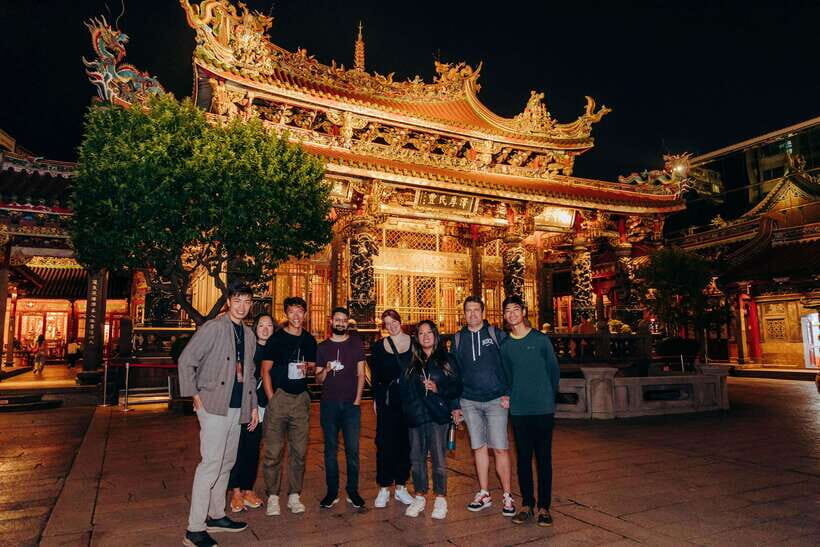
This tour is clearly built around local stories and recommendations, and you can feel the difference in how the guide talks. One review specifically praised Leo for having wonderful explanations and doing much of the tour in a volunteer-like way, with enthusiasm that showed.
So what should you expect from that kind of guidance?
- clear storytelling that connects myths to real-life concerns
- answers when you ask simple questions
- a sense that the guide genuinely enjoys the subject
That last piece is underrated. A temple tour can easily become “standing in line and taking photos.” Here, the tone is meant to be conversational and meaning-focused.
And it helps that the entire experience is delivered in English. If you’ve struggled on tours where translations feel stiff or incomplete, an English-speaking guide who can explain the roles of folk gods and the logic behind rituals will make the whole place easier to read.
Value for $1: what you’re really paying for
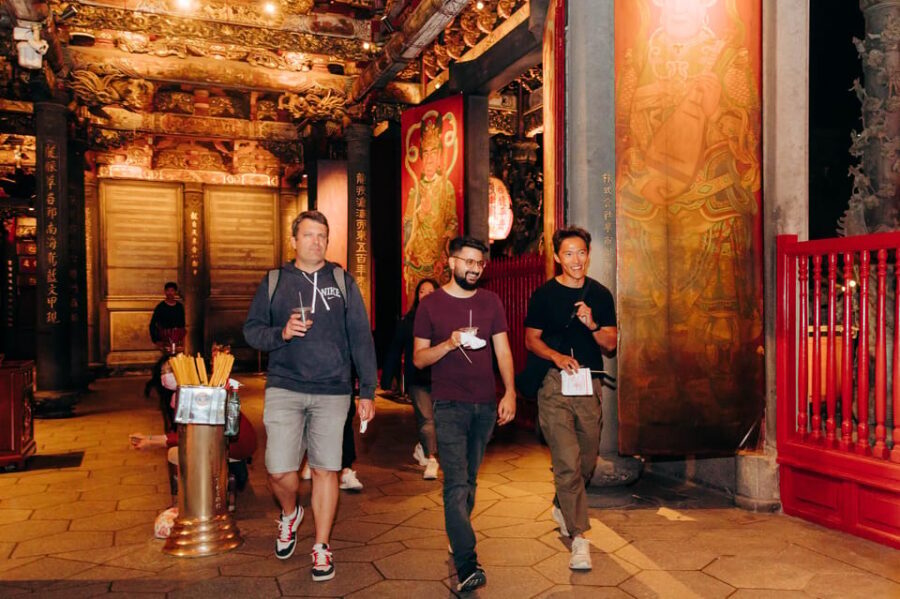
Yes, the price is $1.00 per person. That sounds almost unreal, but it makes more sense when you realize this is a short, guide-led experience with a strong emphasis on local storytelling rather than expensive add-ons.
Here’s the value equation I’d use:
You’re paying for:
- an English-speaking tour guide
- local stories and recommendations
- a structured introduction to Taipei’s origin and Longshan Temple folk religion
- participation in traditions like moonstone sharing and getting a fortune read
You’re not paying for:
- the included tip (it’s not included in the booking fee)
- extra paid attractions (nothing else is listed as an add-on)
So if you’re the type of traveler who learns fast through explanation and wants cultural context, you’ll likely feel like you got a lot for very little. If you only want photos and quick highlights, you might feel the pace more than the meaning.
Who should book this tour
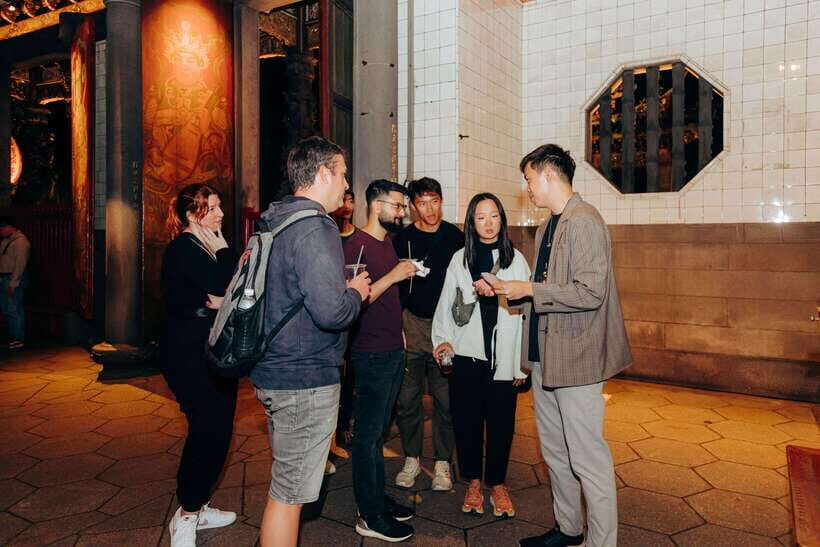
This experience is a great fit if you:
- want a culture-focused Taipei walk instead of a checklist
- care about how Taiwanese folk religion functions in daily life
- enjoy stories about specific gods and what people ask them for
- like short tours you can stack with other plans
It’s also a solid choice if you’re traveling with someone who enjoys learning, since the guide handles both historical context (Taipei’s origins) and practical context (how people interpret rituals now).
If you’re very uncomfortable with fortune reading or ritual participation, you might still enjoy the stories, but you’ll want to go in with clear expectations. Treat it as cultural practice first, outcome second.
Quick etiquette tips so you get the most out of Longshan
You’ll be in a working religious site. Even if you’re just there to learn, act like a respectful student.
- Keep your voice low inside the temple areas.
- Follow your guide’s cue for when to move and when to stop.
- Ask questions instead of testing your own interpretations mid-ritual.
- If you’re given instructions for moonstones, follow them as best you can—this is part of the tradition the tour is trying to explain.
These small habits help you feel present. You’ll also avoid slowing the group.
Should you book Taipei’s Origin & Longshan Temple tour?
If your goal is to understand Taiwan through stories, not just sights, I’d say yes, book it. The combination of Taipei origins plus Longshan Temple folk gods gives you a clearer “whole picture” than most temple-only tours. And the tip-based, guide-led style can make the explanations feel personal—especially given the praise around guide Leo’s enthusiastic, clear storytelling.
Book it if you want:
- an English explanation of folk gods and ritual meaning
- a chance to experience moonstone-style fortune sharing
- a structured 2.5-hour walk that starts and ends at the same convenient spot
Skip it only if you prefer purely passive sightseeing, or if you’d rather avoid participating in fortune-reading-style customs.
FAQ
Where does the tour start?
The tour starts at Longshan Temple Station Exit 1. Look for the tour guide with an orange badge.
How long is the Taipei Origin & Longshan Temple tour?
The duration is 2.5 hours. Starting times depend on availability.
Is the tour language English?
Yes. The tour includes an English-speaking tour guide.
What’s included in the price?
Included items are an English-speaking tour guide plus local stories and recommendations.
Is the guide tip included in the booking fee?
No. The tip to the tour guide is not included in the booking fee.
What’s the price?
The price listed is $1.00 per person.
Is the tour cancellable?
Yes. You can cancel up to 24 hours in advance for a full refund.