Three hours, six eras, one walk.
This Taipei Historic Shared Walking Tour threads together West Taipei’s big landmarks—from Longshan Temple to Chiang Kai-shek Memorial Hall—with a professional English guide and a mobile ticket.
I love the value here: around $5 buys you guided history and context, and the route hits the old Taipei core plus modern power sites without wasting time. Guides such as Amy & Fu, Andy, Susie & Huawen, Eric & Mabel, and Pauline are repeatedly praised for clear English and lots of Q&A.
One possible drawback: it’s still a straight-up walking tour for about 3 hours, so plan for steady walking and comfortable shoes. It also requires good weather, so you’ll want a backup day in your schedule just in case.
In This Review
- Key highlights you’ll care about
- West Taipei history in one practical walking route
- Price and value: why a $5 tour can still feel worth it
- When and where you start (and why the finish is convenient)
- Stop 1: Longshan Temple and the late Qing immigrant story
- Stop 2: Bopiliao Historic Block and the meaning of skin-peeling
- Stop 3: Ximen Red House and Ximending, where colonial architecture learned new jobs
- Stop 4: Presidential Office Building, power from the Japanese period to modern Taiwan
- Stop 5: 228 Peace Memorial Park and the turning point behind a park’s name
- Stop 6: Chiang Kai-shek Memorial Hall, the monument as a story machine
- Guides make or break it: what the best hosts do on this route
- Group size and pacing: what up to 20 people really means
- What to wear and bring for a smooth 3-hour walk
- Who this tour is best for (and who might want a different plan)
- Should you book the Taipei Historic Shared Walking Tour?
- FAQ
- How much does the Taipei Historic Shared Walking Tour cost?
- How long is the tour and when does it start?
- Is there admission cost at the stops?
- Do I need to tip the guide?
- Is the tour guide English-speaking?
- What happens if the weather is bad?
Key highlights you’ll care about
- Three hours, six stops that connect late Qing beliefs, Japanese-era change, and ROC politics
- English guides who answer questions well, including teams like Amy & Fu and Pauline handling multiple languages
- Small group size (up to 20), with the chance of splitting into two groups on busier days
- Free admission at every listed stop, so you’re paying mostly for the guide and storytelling
- Central start and finish points, from Wanhua’s old-city area toward Liberty Square and Chiang Kai-shek Memorial Hall
West Taipei history in one practical walking route
Taipei’s history doesn’t sit politely in one museum. It’s in the streets. It’s in temple gates. It’s in colonial-era façades. It’s in government buildings that look like they were designed to project control.
That’s what makes this tour such a smart first day option. West Taipei was once the city’s political and economic center, then modern development took over. This walk lets you see the layers instead of treating history like a slideshow. You move through multiple time periods—from traditional beliefs tied to the late Qing era, to cultural shifts under Japanese rule, to the post-1949 political landscape shaped by Chiang Kai-shek’s era.
And at the price point, you’re not paying to “consume” history. You’re paying for a guide to give you the timeline and the why behind what you’re seeing.
You can also read our reviews of more walking tours in Taipei



Price and value: why a $5 tour can still feel worth it
For about $5, you’re getting a professional English guide and the cost of the system fee. All the featured stops are listed as free for admission, so you’re not hit with a chain of ticket counters.
That’s the real value math: your money goes to interpretation, pacing, and a route that keeps you from wandering around confused. If you’ve ever visited a landmark and felt like you should be understanding more than you do, this is the fix. You get context as you walk, so the buildings start making sense fast.
One key note to plan for: the guide tip isn’t included in the booking fee. If you book this, I’d treat tipping as part of the real cost of the experience, especially since the guides are praised for being engaging and helpful.
When and where you start (and why the finish is convenient)
The tour starts at 10:00 am. The meeting point is at Like It Formosa 108 in Wanhua District, Sec. 1, Xiyuan Rd (153號). The end is at Liberty Square, No. 21 Zhongshan S Rd in Zhongzheng District, near the Chiang Kai-shek Memorial Hall.
That start-to-finish flow matters. You begin in the older, West Taipei side near Wanhua’s historical energy, then you end on the more monumental, civic side around Liberty Square. It’s a clean way to cover the “old to new” story without needing extra transport mid-tour.
Also, the route is described as near public transportation. Translation: you’re not locking yourself into a remote area, and you can usually get to the meeting point without heroic logistics.
Stop 1: Longshan Temple and the late Qing immigrant story
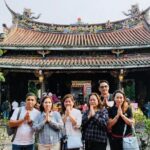
Longshan Temple is the first stop, and it’s a strong opening move. It’s located in the heart of West Taipei and functions as a religious center for the local community. The temple was first established in the 18th century by Chinese immigrants arriving in Taipei.
This is where the tour’s “Taiwan in different eras” theme becomes real. Instead of starting with government buildings, you start with beliefs and community. You can often tell a city’s history by what people build first when they arrive—places of worship anchor people, routines, and identity.
The time here is about 40 minutes, and admission is listed as free. If you want to get your bearings in Taipei quickly, this is useful. Even if you know nothing about Taiwanese history, you can still notice details like how the temple serves as a living part of the neighborhood, not a staged relic.
Stop 2: Bopiliao Historic Block and the meaning of skin-peeling
Next up is Bopiliao Historic Block, a name that immediately grabs attention. The area is described as meaning skin-peeling. Beyond the nickname, the historical point is what used to happen here.
Bopiliao was once the commercial center of northern Taipei. Chinese immigrants conducted trade with the indigenous community, and in its “glorious years,” the streets were full of activity tied to commerce and exchange.
This stop works because it shifts you from faith to economics. Temples show the social glue. Commercial districts show how the money and the movement shaped the city. And when your guide ties the nickname to the area’s past, you stop seeing it as a weird label and start treating it like a clue.
Time on this stop is around 30 minutes, with free admission listed.
You can also read our reviews of more historical tours in Taipei




Stop 3: Ximen Red House and Ximending, where colonial architecture learned new jobs
Then you hit Ximending’s orbit with the Ximen Red House. The building originally served as a public market. Its architecture is described as strongly influenced by colonial Japan, and after World War II and the retreat of Japanese rule, the building was turned into a theater.
That “different jobs in different eras” detail is exactly the kind of thing that makes a walking tour worth your attention. The walls don’t change instantly, but the use can. Markets to theaters tells you a lot about shifting public life and what the city decided it wanted to feel like.
This stop is about 30 minutes and listed with free admission. Even if you don’t go inside for long, the exterior and the building’s story give you a quick snapshot of how colonial-era structures were repurposed after the power changed.
Stop 4: Presidential Office Building, power from the Japanese period to modern Taiwan
A few steps away is the Presidential Office Building, and it’s a visual jolt if you’ve been thinking temple and trade.
The building was established in 1919, and it was initially designed to house the Office of the Governor-General of Taiwan during Japanese colonial rule. The tour frames this as a political center of Taiwan, which makes sense: you’re looking at a site that has played ruler-adjacent roles through changing governments.
Time here is about 20 minutes, with free admission listed.
Even without getting deep into dates, this stop teaches a practical lesson: architecture is political. Big civic buildings aren’t just “pretty.” They’re made to communicate authority, organization, and permanence. When you pair this with the earlier temple and market stops, you get a stronger sense of how Taipei’s priorities shifted over time.
Stop 5: 228 Peace Memorial Park and the turning point behind a park’s name
Next is 228 Peace Memorial Park, and it’s one of the stops where the story gets heavier.
This park was established in 1908 during the Japanese colonial period as Taihoku New Park. It’s described as the first European-styled park in Taiwan. In 1947, the park became the scene of protests against the Kuomintang-led ROC government.
That combination is powerful: European styling under Japanese rule, then a major political rupture just a few decades later. A park can look calm on the surface, but the events attached to it can make it a warning sign—or a memorial.
Time here is about 30 minutes, and admission is listed as free. If you want to understand why Taiwan’s modern identity has such strong emotional gravity, this is the kind of stop that brings it into focus—without needing a textbook.
Stop 6: Chiang Kai-shek Memorial Hall, the monument as a story machine
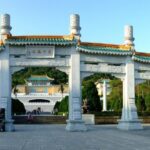
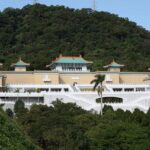
The last stop is Chiang Kai-shek Memorial Hall, one of Taipei’s most recognizable landmarks. It’s described as a national monument and a tourist attraction built in memory of Chiang Kai-shek, former President of the Republic of China (ROC) from 1948 to 1975.
Time is about 30 minutes, with free admission listed.
This is a great finale because the building’s scale and symbolism make the idea of a “political era” impossible to ignore. When you finish here, you’ve already walked through religious life, trade, colonial architecture, and civic governance. So the memorial doesn’t feel like an isolated stop. It feels like a capstone.
Also, it’s a convenient endpoint. You’ll end at Liberty Square near this hall, which makes it easier to plan what comes next—coffee, transit, or your next attraction.
Guides make or break it: what the best hosts do on this route
This tour lives or dies by the guide. The good news: the experience is explicitly built around a professional English guide, and the overall ratings are extremely high.
From the named guides connected with the tour format—Amy & Fu, Amy & Andy, Susie & Huawen, Eric & Mabel, and Pauline—you can see a pattern in what gets praised: strong English, engaging delivery, and answers that connect the dots. Pauline, for example, is noted for managing multiple languages, which suggests the tour can handle real group energy instead of turning into a lecture.
I also like that the tour design supports questions. History walking tours can be one-way street speeches. Here, the guide approach is clearly meant to keep you talking and curious, so you leave with understanding, not just dates.
Group size and pacing: what up to 20 people really means
The tour has a maximum of 20 travelers. That’s a sweet spot. It’s small enough for the guide to notice your questions and manage flow through crowded areas, but large enough that you don’t feel like you’re on a private obligation.
On busier days, it’s possible the group splits into two smaller groups with their own guide. That’s not a downside by default. Smaller groups can mean easier listening and less bunching up on sidewalks.
The tour lasts about 3 hours, so it’s not an all-day commitment. It’s long enough to cover major eras and multiple landmarks, but short enough to still let you enjoy the rest of Taipei that same day.
What to wear and bring for a smooth 3-hour walk
This is a walking tour, plain and simple. I’d treat comfortable walking shoes as mandatory. The route connects temple and commercial areas and then moves toward large civic sites. That mix usually means a lot of steady street time.
Bring basic water, and check weather before you head out. The experience requires good weather, so if you’re traveling in a rainy stretch, plan to keep some flexibility.
Since there’s a mobile ticket, make sure your phone battery is happy and you can access the ticket easily when you meet the guide.
Who this tour is best for (and who might want a different plan)
This tour is a strong match if you want:
- a first-time orientation to Taipei’s West side and core sights
- a history framing that connects eras instead of separate stops
- an English guide who can translate confusing context into clear takeaways
It’s also smart for travelers who don’t want to spend their day bouncing between different transportation hops. The route is designed to keep you walking in a logical line through the old-to-new story.
If you’re traveling with very young kids who need frequent breaks, a 3-hour walk may feel like a lot. The tour is built for “most travelers,” but your tolerance for walking will decide whether the pace feels friendly.
Should you book the Taipei Historic Shared Walking Tour?
Yes, if you want a fast, high-value introduction to Taipei’s major historical layers—religion, commerce, colonial architecture, and political milestones—within about 3 hours. The $5 price is hard to ignore, and the fact that key sites are free admission means your cost stays focused on the guide.
Book it especially if you care about context. If you’re the type who looks at a temple or a memorial and wants the story behind it, this tour gives you that narrative as you go.
I’d pass or switch plans if you dislike walking or if weather risk would ruin your schedule. The experience depends on good weather, so keep your day flexible and wear shoes you can trust.
If you decide to go, remember the tip isn’t included. It’s a small choice that makes a big difference for a guide who’s doing the hard work of turning stone and streets into understanding.
FAQ
How much does the Taipei Historic Shared Walking Tour cost?
The price is listed as $5.
How long is the tour and when does it start?
It’s approximately 3 hours and it starts at 10:00 am.
Is there admission cost at the stops?
Admission is listed as free at each of the six featured stops.
Do I need to tip the guide?
The tip to the tour guide is not included in the booking fee.
Is the tour guide English-speaking?
Yes. The tour includes a professional English guide.
What happens if the weather is bad?
This experience requires good weather. If it’s canceled due to poor weather, you’ll be offered a different date or a full refund.