REVIEW · TAIPEI
2-Hour Private Dadaocheng Walking Tour
Book on Viator →Operated by MyProGuide Inc. · Bookable on Viator
Taipei’s tea-and-textile past starts right on the street. This 2-hour private Dadaocheng walking tour takes you through the old trade heart of Taipei, with stops that connect everyday life, foreign merchants, and the city’s later “new life” makeover around 2005. It’s built for walking and guided interpretation, not museum time.
I especially love how the guide ties the neighborhood’s trade history to what you can still see today, from merchant streets to working markets. And I like the tight mix of sights: Dihua Street, a textile stop, a century-old temple, and then the riverfront finish at Dadaocheng Wharf.
One consideration: this is a lot of on-foot time for two hours, and the schedule can shift due to traffic or weather. Comfortable shoes aren’t optional, and you’ll want to pace yourself.
In This Review
- Key highlights you will notice
- Dadaocheng on foot: why this old district still works
- Beimen MRT meet-up and the walk into Dihua Street
- Yongle Textile Market: understanding fabric culture, not just fabrics
- Taipei Xia Hai City God Temple: religion, wishes, and local rhythm
- Dadaocheng Wharf and the Tamsui River edge
- The guide’s job: connecting tea, herbs, clothing, and daily life
- Price and what you’re really paying for at $35
- Timing, walking pace, and what to wear
- Who should book this private Dadaocheng walking tour?
- Should you book it or pass on it?
- FAQ
- Where does the tour start and where does it end?
- How long is the walking tour?
- What is included in the tour price?
- What is not included?
- Is this a private tour?
- Do I need to worry about weather?
- What is the cancellation policy?
Key highlights you will notice

- Private group, local-style pace with a licensed English-speaking guide
- Dihua Street as a living corridor of Taiwan’s old trade and city life
- Yongle Textile Market to understand how textiles shaped local culture and work
- Taipei Xia Hai City God Temple for temple culture and making a wish for prosperity and peace
- Dadaocheng Wharf finishing along the Tamsui River edge with maritime context
- Tea and herbal themes tied into clothing, everyday life, and religious practice
Dadaocheng on foot: why this old district still works
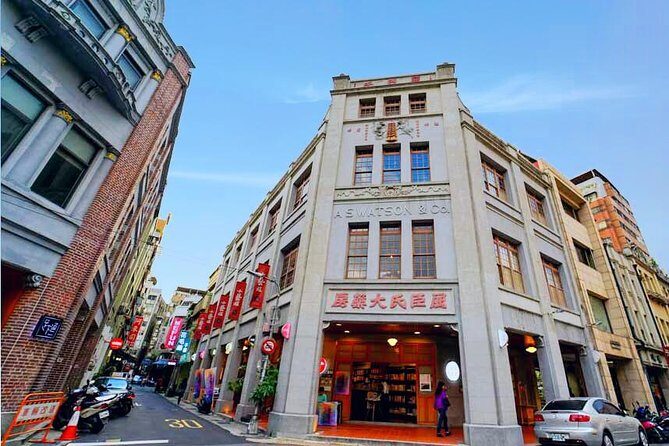
Dadaocheng is one of those places where you can feel the layers. In the earlier years, it was Taipei’s important harbor for trade. Foreign merchants set up satellite offices nearby, with specialties tied to tea, cotton, and silk textile work. That matters, because it’s not just backstory. It helps explain why the streets and markets you’ll walk through look the way they do, and why certain crafts and shop cultures took root.
The Taipei city government also brought new life to the area in 2005. That’s your clue that Dadaocheng isn’t frozen in time. It’s a working neighborhood with history stitched into daily routines, and you’ll get a guided way to read it instead of just snapping photos and moving on.
This is also a good length. At about two hours, you avoid the “whole-day commitment” problem. You get a coherent loop—street to market to temple to waterfront—without burning a whole morning.
You can also read our reviews of more walking tours in Taipei



Beimen MRT meet-up and the walk into Dihua Street
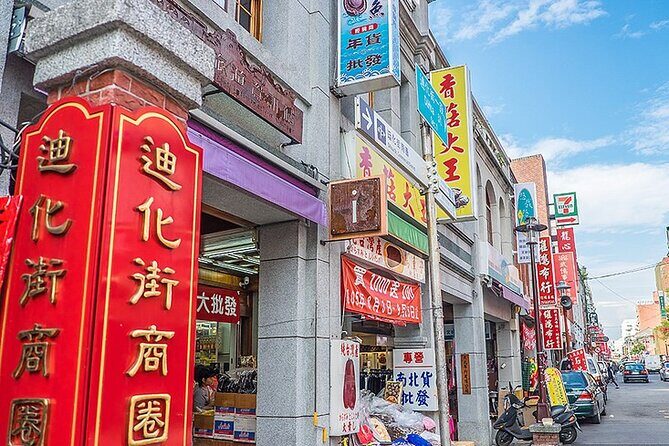
You start at Beimen MRT Station, Exit 2 in Datong District, and the tour ends at Dadaocheng Wharf. From the beginning, the format is simple: you walk the district with a guide who explains what you’re seeing and why it mattered.
The first major stop is Dihua Street, where the area’s history of international trade and business development comes into focus. This is where you learn how the late Qing Dynasty into the early Japanese period helped shape the trade-driven identity of Dadaocheng. Even if you don’t know the terms yet, your guide’s job is to translate them into plain street-level observations—like what kinds of goods were important, and how the neighborhood’s commercial energy changed over time.
The most practical thing here: Dihua Street is also where the tour encourages you to move like a local. Instead of treating every corner like a performance, you’re guided to watch for the textures of everyday life: storefront rhythm, the way people use space, and how historical buildings still frame commerce.
Time tip: you’ll spend about 50 minutes at this first stop, so you’ll want to use your first ten minutes for orientation. Good shoes help a lot here because you’re not just looking—you’re walking and absorbing.
Yongle Textile Market: understanding fabric culture, not just fabrics
Next up is the Yongle Textile Market, a short stop at around 10 minutes. It’s easy to underestimate a ten-minute market walk—until a guide connects it to the bigger story.
Textiles in this part of Taipei weren’t only about clothing. They were about industry and identity. Since Dadaocheng’s historical trade emphasis included cotton and silk, a textile market stop gives you a tangible link between the district’s past and its present-day craft economy. Your guide will use this stop to explain textile culture in a way that makes it feel relevant, not like a random detour.
What to expect in practice: you’ll likely look at how fabrics and related goods are presented, and you’ll learn what those details meant to merchants and locals over time. Because the stop is brief, it’s best for visitors who like compact learning moments—short, focused, and then moving on.
Potential drawback: if you’re the type who wants long browsing time in markets, the textile stop may feel too short. The trade-off is that the itinerary keeps momentum for the temple and wharf.
Taipei Xia Hai City God Temple: religion, wishes, and local rhythm
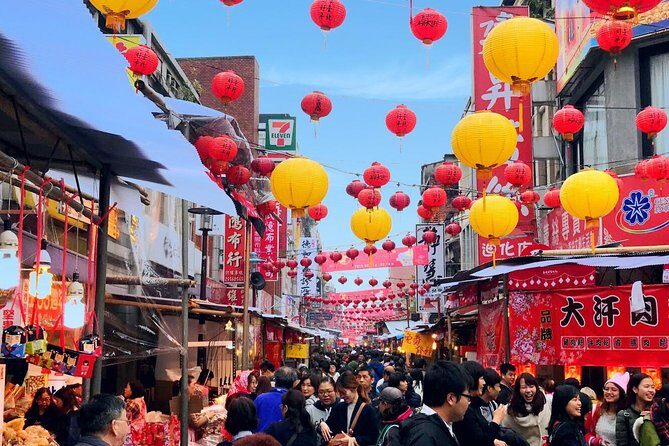
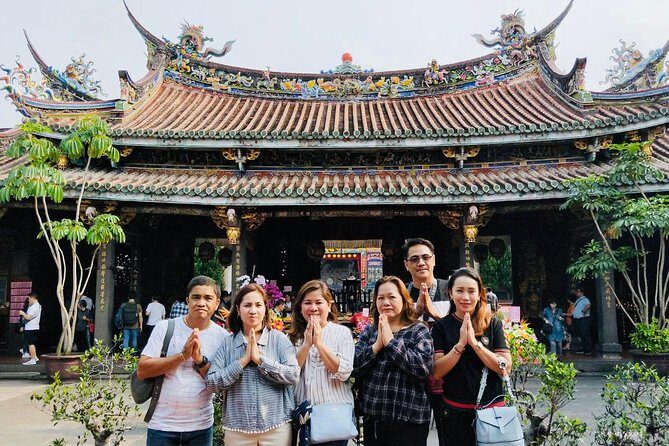
After textiles, you’ll visit Taipei Xia Hai City God Temple, with about 30 minutes there. This is described as a century-old temple, which matters for two reasons. First, it’s old enough that its role in community practice likely runs deep. Second, it gives the tour a cultural anchor beyond trade and commerce.
Your guide will explain Taiwanese religion culture and how people use temple spaces for intentions—specifically, the opportunity to make a wish for prosperity and peace. The temple also attracts younger people for prayer, which helps you see that this isn’t only heritage tourism. It’s still part of how people talk to the spiritual side of life.
In a practical sense, temple stops are also good for your brain. After street-level history and a market stop, the temple gives you a different pace: observation, explanation, and a chance to slow down without losing context.
One small reality check: since it’s a working temple space, you’ll want to be respectful with photos and behavior. If you’re unsure about what’s appropriate, follow your guide’s cues.
Dadaocheng Wharf and the Tamsui River edge
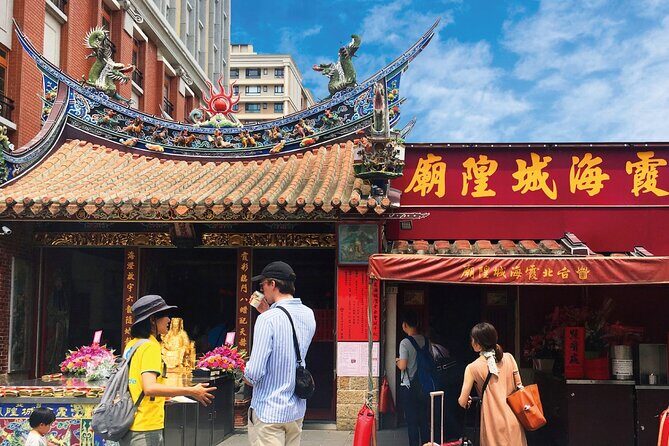
The tour closes at Dadaocheng Wharf along the Tamsui River. With about 30 minutes here, the idea is to bring the maritime story back into view. It’s not just “nice water photos.” The wharf ties to the district’s identity as a trade harbor and gives you a clearer sense of why goods moved the way they did.
What I like about ending here is that it gives you a visual payoff after learning about merchants, textiles, and temple practice. You can connect the dots between the district’s commercial roots and its physical geography. The riverfront setting also makes the walk feel complete. You started in the street trade zone and you finish where ships and commerce would have influenced life.
If you’re planning onward travel, this finish point is handy. Ending at a landmark waterfront means you can decide what to do next with the least backtracking.
You can also read our reviews of more private tours in Taipei






The guide’s job: connecting tea, herbs, clothing, and daily life
This tour is sold as a historical walk, but the real value is how your guide stitches the themes together. One reason the experience earns such strong praise is the way guides seem to combine structure with real local context.
For example, guides like Isabella are noted for being organized and knowledgeable, with a tour arc that can cover temple practice alongside herbal medicine and fabrics. Another guide, Alex Feng, is repeatedly described as arriving early, being friendly and enthusiastic, and bringing the merchant culture story to life in a market area. And May Ei stands out for making the historic side of the neighborhood feel understandable, not abstract.
Even if you don’t hear your guide’s exact phrasing, you’ll likely see the same teaching strategy:
- Trade history is explained through what you can see on the street
- Tea and herbs connect to everyday culture, not just products
- Clothes and textiles become a lens for the district’s economy
- Temples add the human layer—wishes, prosperity, peace
Why this matters to you: it turns a walk through older streets into something you can remember. Without that guidance, Dadaocheng can look like a good place to wander. With guidance, it becomes a story you can trace.
Price and what you’re really paying for at $35

At $35 per person, this private tour is priced like a guided neighborhood experience, not a museum ticket package. You’re paying mainly for three things:
- A licensed English-speaking guide
- Insurance
- A guided route that hits the major “story points” in about two hours
You don’t pay extra for entries at the key stops. The stops are described as free admission for the major listed sights, which means your cost stays mostly fixed. The biggest “hidden variable” is your own time and energy because the day is on foot.
Also note the format: it’s private, so you’re not competing with strangers for attention. That matters because this is the kind of tour where explanation is the product. If you had a mixed group, it’s easier for the guide to talk in generalities. A private setup keeps the experience tighter.
A small scheduling detail: it’s commonly booked about 53 days in advance. That’s not a guarantee of anything, but it does suggest people plan ahead for short, focused walks like this.
Not included is simple: meals and transportation. You’ll want to eat before or after, and plan your MRT connection separately.
Timing, walking pace, and what to wear
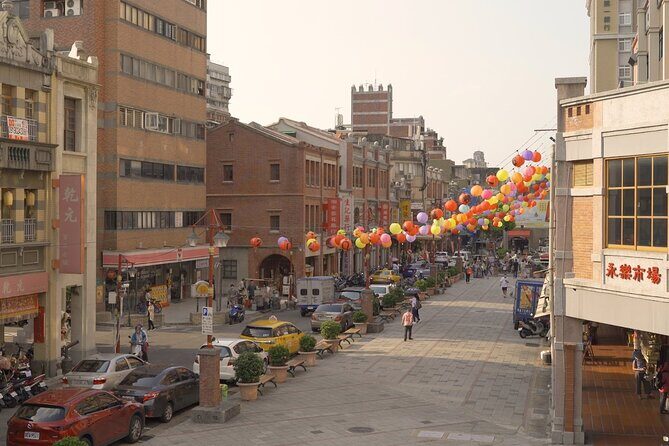
This is a two-hour tour with walking the whole time. The tour duration is approximate and may adjust due to traffic jam or weather. That’s normal for a neighborhood walk—expect it and you won’t feel rushed.
Here’s the realistic pace breakdown:
- Dihua Street: around 50 minutes
- Yongle Textile Market: around 10 minutes
- City God Temple: around 30 minutes
- Dadaocheng Wharf: around 30 minutes
So the time isn’t evenly spread. The first stop is the long one, which is where your feet will feel it most. Bring or choose comfortable shoes you’ve already worn. If you’re traveling with small kids or older relatives, this is where you’ll want to decide if the pace is right.
Also, because it’s weather-dependent, you’ll benefit from dressing in layers. Taipei conditions can shift, and a rain shell can save your afternoon.
Who should book this private Dadaocheng walking tour?
You’ll likely love it if:
- You want a short, guided taste of Taipei history without a full-day plan
- You enjoy street-level learning: shops, markets, and old religious sites
- You like a tour that covers more than one theme (trade, textiles, tea/herbs, temple culture, and the river)
- You prefer private attention rather than joining a bigger group
You might skip it if:
- You want hours of market browsing time
- You dislike walking for long stretches, even if total time is only two hours
- You prefer quiet self-guided wandering over structured storytelling
It’s also a good match for first-time Taipei visitors who want a neighborhood you can reach easily and explore in one coherent loop—starting at Beimen MRT and finishing at the wharf.
Should you book it or pass on it?
My take: this is an easy yes for anyone who wants Taipei’s older trade district explained in a human way. The price is fair for a private, guided walk, especially since the main stops are free and the guide provides the real value through connections between tea, herbs, textiles, temple practice, and maritime geography.
Book it if you’re the type who likes learning while walking and you don’t mind a steady pace. Skip it only if you need long market time or you’re worried about weather and walking comfort.
If you can only choose one “history-with-life” neighborhood tour in Taipei, this is a strong candidate.
FAQ
Where does the tour start and where does it end?
The tour starts at Beimen Station, Datong District (Exit 2). It ends at Dadaocheng Dock/Dadaocheng Wharf in Datong District.
How long is the walking tour?
It lasts about 2 hours, though the timing may adjust due to traffic or weather.
What is included in the tour price?
The tour includes a licensed English-speaking guide and insurance. You also get a mobile ticket.
What is not included?
Meals and transportation are not included.
Is this a private tour?
Yes. It’s private, so only your group participates.
Do I need to worry about weather?
The experience requires good weather. If it’s canceled due to poor weather, you’ll be offered a different date or a full refund.
What is the cancellation policy?
You can cancel for a full refund if you cancel at least 24 hours before the start time. Free cancellation is also supported, and any cutoff is based on the local time of the experience.