REVIEW · TAIPEI
Beitou and Yangmingshan Day Tour from Taipei
Book on Viator →Operated by Edison Travel Service · Bookable on Viator
Yangmingshan and Beitou feel like a reset button. You’ll trade Taipei traffic for fumaroles, lava terrain, and hot-spring history, then finish with a Beitou foot bath. I especially like how the route mixes big nature stops with real culture stops, and I loved the way the small group size helps you actually hear what your guide is pointing out.
Two things I liked a lot: the variety (volcanic geology, a flower clock, a presidential mansion, and geothermal valleys) and the pace (enough time to enjoy each stop without feeling sprinty). One drawback to plan for: this is mostly walking, stairs, and mountain weather changes, and the hot-spring time is a foot soak, not a full hot-spring swim.
In This Review
- Key things that make this day tour worth your time
- Why Yangmingshan + Beitou fits neatly into one Taipei day
- Price and what $85 buys you (and what it doesn’t)
- Meeting point, route shape, and timing around Shilin Night Market
- Yangmingshan National Park: fumaroles, lava terrain, and the Quiet Park vibe
- Beitou Library and Beitou Hot Spring Museum: the culture layer people often skip
- Beitou Public Library (Beitou Library)
- Beitou Hot Spring Museum
- Beitou Thermal Valley, Flower Clock, and the “steam-to-blooms” rhythm
- Beitou Thermal Valley (Hell Valley)
- Flower Clock in Yangmingshan National Park
- Yang-Ming Shu-Wu Mansion and Zhuzihu: history meets old lava-dammed farming
- Yang-Ming Shu-Wu Mansion
- Zhuzihu: calla lilies, hydrangeas, and mountain vegetable farming
- Xiaoyoukeng, Qingtiangang, and Lengshuikeng: the volcanic trail you can smell
- Xiaoyoukeng Recreation Area
- Qingtiangang
- Lengshuikeng (Cold Water Pit)
- The Beitou foot bath: best for tired feet, not full hot-spring bathing
- Pacing, walking, and weather: how to not get grumpy on a mountain day
- Guides and group size: why the best part is often the person driving explanations
- What to bring (and what will save you money)
- Should you book this Beitou and Yangmingshan day tour?
- FAQ
- How long is the Beitou and Yangmingshan day tour?
- Where do I meet the tour?
- Does the tour include hotel pickup and drop-off?
- Is lunch included?
- Is there bottled water included?
- Is the hot spring experience a full bath?
- Are tickets included for the stops?
- How much walking should I expect?
- What should I bring for weather changes?
- Can I be dropped off at Shilin Night Market?
Key things that make this day tour worth your time
- Small group (max 20) keeps the day feeling personal, not chaotic.
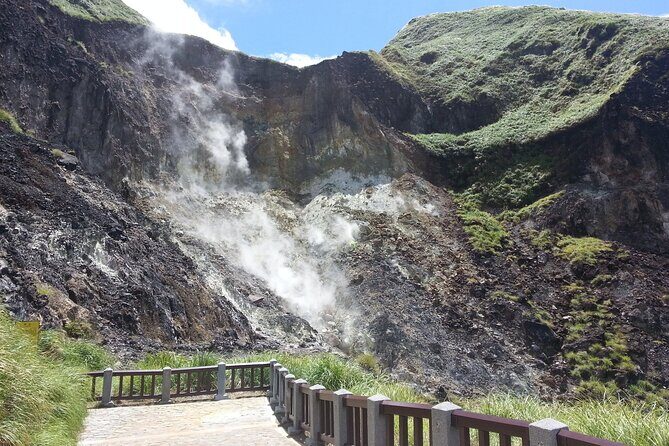
- Yangmingshan geology lets you see steam, craters, lava, and fumaroles up close.
- Beitou hot-spring culture stops (library + museum) add context beyond just scenery.
- A foot bath at the end helps your legs after volcanic walking.
- Guide-led timing matters here, because weather can change what you’ll be able to see.
Why Yangmingshan + Beitou fits neatly into one Taipei day
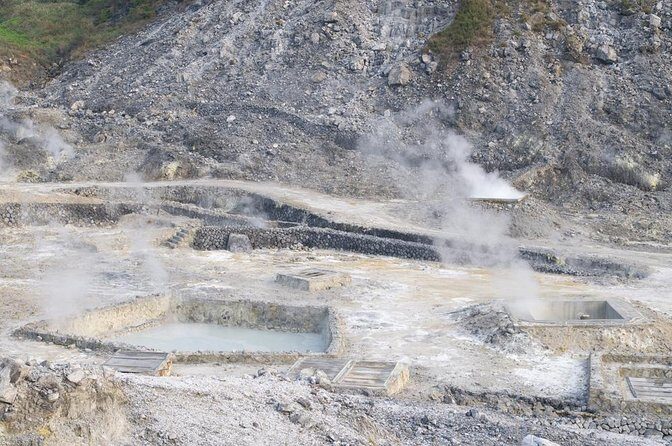
This tour works because it tackles two sides of the same story: Taiwan’s volcanic forces and how people built a hot-spring culture around them. Yangmingshan National Park gives you the geology first—lava terrain, craters, and fumaroles—so the steam and heat make immediate sense once you later head into Beitou’s hot-spring world.
Beitou then grounds the day in people and history. You’re not just looking at rock. You’re learning how Taipei-area hot springs became a public destination—first through the Japanese-era museum, then through the district’s continued identity.
It’s a long day (about 9 hours), but the tight loop is the point. You’ll cover a lot more than you’d likely manage on your own in the same time window, especially if you want guidance on what to look for at each site.
You can also read our reviews of more tours and experiences in Taipei.

Price and what $85 buys you (and what it doesn’t)
At $85 per person, you’re paying for the full package: a professional licensed guide, an air-conditioned vehicle, and a hot spring foot bath. You also get local general liabilities insurance, plus a mobile ticket setup for an easier day of check-ins.
What you’re not getting is included meals and bottled water. Lunch is on your own (you’ll have time in the Zhuzihu area), and drinks are also extra. The good news: many stops have free admission tickets, which helps keep your day predictable.
The other “pay attention” detail: while the wording can make people expect full-on soaking, this experience includes a foot bath only. One clear note from past participants is that you shouldn’t plan on wearing a swimsuit expecting to enter hot-spring pools. Your “soak” time is for feet—short, relaxing, and meant to reset after walking.
Meeting point, route shape, and timing around Shilin Night Market
You meet at Zhongxiao Park (No. 1, Lane 134, Section 2, Zhongxiao E Rd, Zhongzheng District). Most of the day is out in the mountain area and geothermal zones, and you wrap up around 17:00 if you return to MRT Zhongxiao Xinsheng Station. If you want an easy dinner plan, you can choose a drop-off near Shilin Night Market (around 16:40).
That end choice is more useful than it sounds. Yangmingshan and Beitou can leave you hungry, and Shilin is an easy place to grab street food without thinking too hard about transport afterward. If you’d rather keep the evening calm, returning to the MRT station is the simpler move.
Yangmingshan National Park: fumaroles, lava terrain, and the Quiet Park vibe
Yangmingshan is the core of the day, and it’s not subtle. The park is known for flora and major geological features—fumaroles, lava terrain, craters, and hot springs. You’ll spend a chunk of time here walking and looking at rock formations up close, which is exactly the kind of place where having a guide helps.
A fun practical detail: the park is certified as the world’s first Urban Quiet Park by Quiet Park International. Translation: you’re not just escaping the city; the area is managed for calmer, more reflective nature experiences. That’s a nice contrast after starting in Taipei’s busiest zones.
Plan for this stop to be your “legs” portion of the day. The tour runs with limited time per stop, so you’ll want comfortable shoes and a steady pace. If you’re sensitive to uneven ground, take it slow around geothermal areas where steam and mineral formations can make the ground feel slippery.
Beitou Library and Beitou Hot Spring Museum: the culture layer people often skip
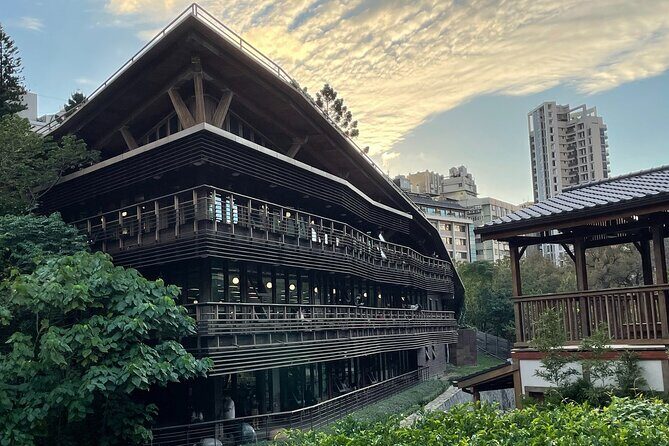
After the wild geology, Beitou slows things down in a good way.

Beitou Public Library (Beitou Library)
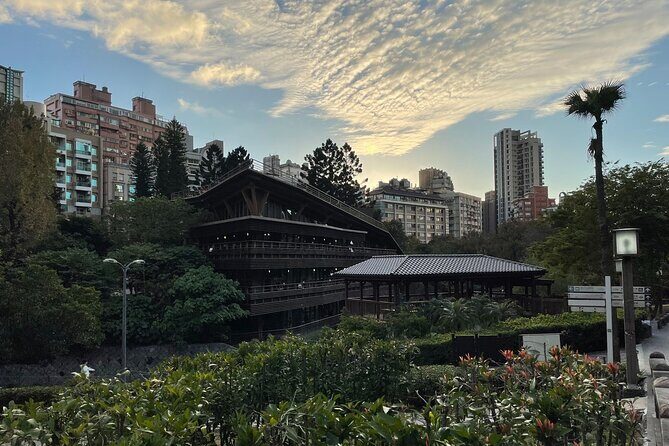
This library is inside Beitou Park and near the Beitou Hot Spring Museum. It’s known for a sustainable design and has been recognized by international culture media outlets, and it’s also popular for photography because the building has a distinctive look.
Here’s why I think this stop is worth your time: it gives you a quick snapshot of how Beitou’s development connects with modern life. You also get a calm, shaded place to pause if your legs need a breather before the museum and geothermal valley.
Beitou Hot Spring Museum
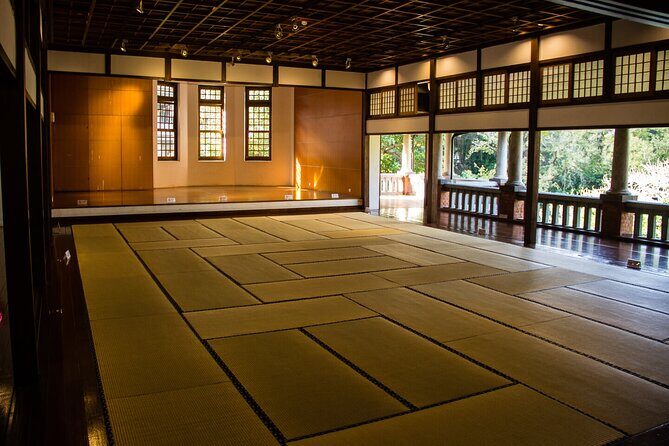
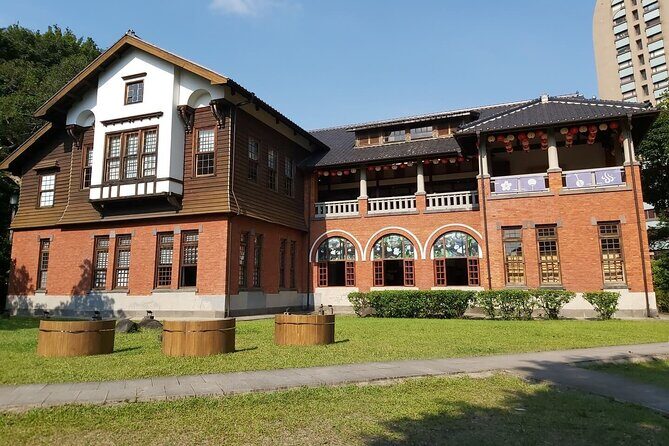
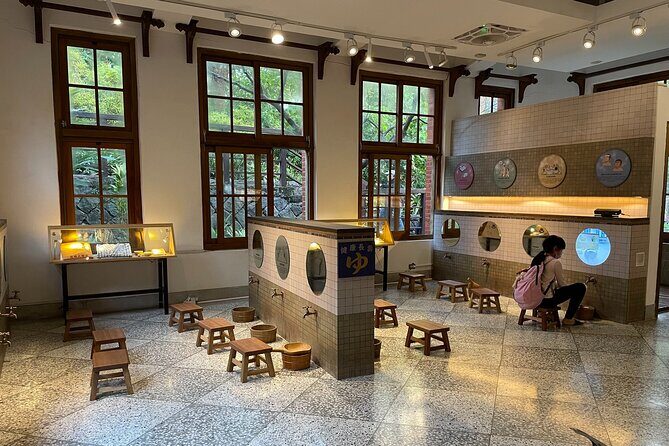
The museum is a short walk away and is housed in a Tudor-style building. It dates to the Japanese colonization era, and it’s designed to show how public bathing (sento) worked. You’ll see exhibits that simulate those bathhouse facilities, so you’re not stuck with only text panels.
This is also one of the best places on the route for context. After you’ve been around steam vents in Yangmingshan, the museum makes it clearer why hot springs became a destination in the first place, and how the idea of communal bathing shaped the district.
Beitou Thermal Valley, Flower Clock, and the “steam-to-blooms” rhythm
The day takes a nice visual and sensory turn between geothermal steam and floral color.
Beitou Thermal Valley (Hell Valley)
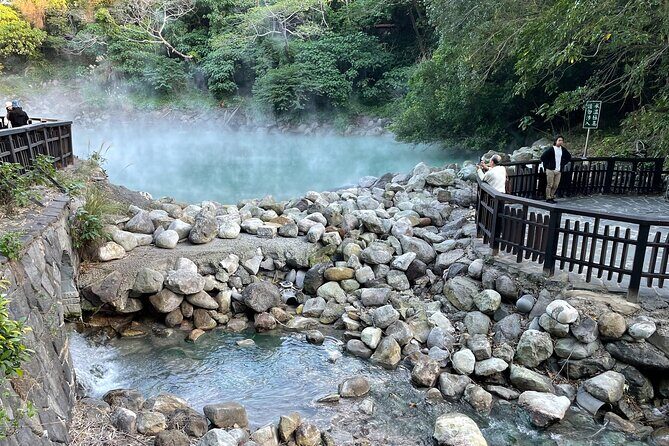
This is also known as Hell Valley or Ghost Lake because you’ll see sulfuric steam fog rising. The heat isn’t just atmospheric—this area is described as one of the heat sources supplying sulfur springs nearby. So when you stand here, you’re not only seeing a dramatic scene. You’re seeing part of the heating system that feeds the district.
Expectation tip: the steam can feel strong. If you’re prone to headaches with strong odors or steam, take your time and step back occasionally.
Flower Clock in Yangmingshan National Park
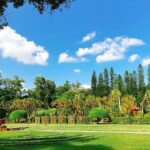
Then you’ll get a more relaxed, scenic stop: the Yangmingshan Flower Clock, the centerpiece near the bus terminal and visitor center. The flowers change by season, and the bloom can run year-round. Cherry blossom season is especially crowded around the clock.
Why this stop works in a day like this: after sulfur steam and volcanic ground, it’s a softer landing. You’re able to slow down, take photos, and reset your brain before the more intense volcanic recreation areas.
Yang-Ming Shu-Wu Mansion and Zhuzihu: history meets old lava-dammed farming
These stops add variety that keeps the day from feeling like one long nature hike.
Yang-Ming Shu-Wu Mansion
This mansion was formerly the Zhongxing Guesthouse and served as the summer residence of Chiang Kai-shek, used to host foreign dignitaries. What I like about this stop is the contrast: the site was built on what used to be old-growth forest, and part of the original forest was preserved.
So yes, it’s a historical place—but it’s also a nature-and-conservation story. If you’re tired of only looking at geology, this gives you a different kind of site-reading: architecture and land-use.
Zhuzihu: calla lilies, hydrangeas, and mountain vegetable farming
Zhuzihu is a farming area tucked into the mountains. It’s known for calla lily and hydrangea, and it also connects to the volcanic story: the area was originally a lava-dammed lake formed by volcanic eruptions.
There’s a practical payoff too. Zhuzihu is known for mountain vegetable cuisine, and lunch here is at your own expense. If you want to taste something local without chasing it for hours on your own, this is a smart point in the route to do it—just come with enough cash.
Xiaoyoukeng, Qingtiangang, and Lengshuikeng: the volcanic trail you can smell
This is the part of the day that makes Yangmingshan feel real. The recreation areas are formed by post-volcanic activity, and you’ll be able to observe the steam and mineral deposits up close.
Xiaoyoukeng Recreation Area
Xiaoyoukeng literally means little oil pit, and it’s one of the most popular spots in the park. The walking trail offers close-up views from different angles so you can see—and sometimes smell—the steam coming from cracks. You’ll also notice sulfur crystals around fumaroles, which makes the volcanic activity feel physical, not theoretical.
If you’re the type who likes to understand what you’re seeing, this stop is one of the best on the entire tour. The formations explain the heat in a direct way.
Qingtiangang
Next is Qingtiangang, a broad lava terrace formed when lava flowed north after an eruption. During Japanese colonization, it functioned as a ranch for water buffaloes. The description notes you can still see naturally bred water buffaloes there, though whether you catch them can depend on timing.
One practical way to handle this: if water buffalo sightings are your must-see, keep your expectations flexible. The tour spends limited time at each stop, so you may want to look as soon as you arrive rather than waiting for a “perfect moment.”
Lengshuikeng (Cold Water Pit)
Finally, you’ll reach Lengshuikeng. It’s described as a barrier lake formed by volcanic lava. The hot spring water here is colder than other areas, around 40°C, which is why it gets the cold water name.
This stop works like the conclusion to the geothermal story: you start with steam and heat, and you end with a cold-water pit that still ties back to the same volcanic system. Then you’ll be ready for the foot soak.
The Beitou foot bath: best for tired feet, not full hot-spring bathing
The included hot spring foot bath is the “reset” at the end. It’s described as a way to relieve stiffness after walking. Past participants specifically noted the soak is about 5–10 minutes, and that paper towels are provided to dry off your feet.
This is a key expectation point: you’ll want comfortable shoes today, and you should plan on foot-only soaking. If you’re hoping for a full bathing experience in pools, you’ll need a separate plan outside this tour.
Also, keep an eye on timing. The foot bath is one of the reasons the day works so well—short and relaxing, not a huge time sink. If you take your time at photo spots earlier, you might feel rushed here, so pace yourself through the morning.
Pacing, walking, and weather: how to not get grumpy on a mountain day
This is a lot of input in one day. The tour runs about 9 hours, and it spends significant time in Yangmingshan, which means walking and stairs. Comfortable casual clothes and shoes are a must.
Weather is the other big variable. The tour notes that mountain temperatures can drop dramatically, and you should bring an extra coat. That matters because visibility can change what you’ll be able to see from viewpoints.
There’s also the human factor: guides may adjust timing based on weather and conditions. In past experiences, guides like Kevin reportedly shifted the schedule to get better viewing when conditions changed. That’s one reason I prefer booking a guided day trip here instead of doing it all independently.
If you’re prone to getting tired fast, this tour is still doable, but you’ll enjoy it more if you walk steadily and don’t burn all your energy chasing every photo angle.
Guides and group size: why the best part is often the person driving explanations
A pattern shows up across the experiences: guides make a real difference. People have praised specific guides including Kevin, David, Tony, Wallis, Ann, Jenny, Peggy, Molly, and Chiara. The consistent theme isn’t just friendliness—it’s that the explanation makes the geothermal and historical stops easier to understand.
There’s also the small group factor. With a maximum of 20 travelers, you’re more likely to get quicker answers and better flow than with huge buses. It also helps you keep track of the group at stops.
One caution I’d give you: one participant had a problem when a meeting location changed and wasn’t communicated well. That’s rare, but it’s a reminder to double-check any day-of messaging and be ready to confirm where to meet if instructions shift.
What to bring (and what will save you money)
Because bottled water and food aren’t included, pack or plan accordingly.
Bring:
- Comfortable shoes for walking and stairs
- An extra layer or coat for mountain chill
- Cash for meals, beverages, souvenirs, and tips (many places don’t accept credit cards)
- Your mobile ticket confirmation info for smoother check-in
You might also consider a small rain layer. Beitou and Yangmingshan can get damp, and steam-filled zones make weather feel sharper.
Skip overpacking. There’s no point carrying more than you need for a full day on foot and in and out of vehicles.
Should you book this Beitou and Yangmingshan day tour?
I’d book it if you want a well-structured day that covers two big themes—volcanic geology and hot-spring culture—without having to coordinate buses, routes, and ticket timing yourself. The value is strongest when you like variety: parks, museum context, scenic stops, and a practical foot bath at the end.
I would think twice if:
- You’re expecting a full hot-spring bathing experience. This is a foot soak.
- You don’t do well with hills, stairs, and uneven paths. The tour notes walking is substantial.
- Your top priority is lingering at one place. Each stop is time-limited, so it’s built for seeing a lot, not staying long.
For most people planning a first visit to Taipei, this is a smart use of one day—especially if you like nature, enjoy learning while you walk, and want an easy evening option like Shilin Night Market after you’re done.
FAQ
How long is the Beitou and Yangmingshan day tour?
The tour runs about 9 hours.
Where do I meet the tour?
You meet at Zhongxiao Park, No. 1, Lane 134, Section 2, Zhongxiao E Rd, Zhongzheng District, Taipei City.
Does the tour include hotel pickup and drop-off?
Hotel pickup and drop-off are included if you select the private option. Otherwise, the tour starts back at the meeting point.
Is lunch included?
No. Lunch is at your own expense during the Zhuzihu stop, and food and drink are not included overall.
Is there bottled water included?
No. Bottled water is not included.
Is the hot spring experience a full bath?
The included experience is a hot spring foot bath, not full hot-spring bathing.
Are tickets included for the stops?
The provided stop times note free admission tickets for each listed attraction, and the tour includes professional guidance and transport.
How much walking should I expect?
Expect lots of walking and stairs, especially during the Yangmingshan portion.
What should I bring for weather changes?
Bring comfortable shoes and casual wear, and plan for cooler mountain temperatures by packing an extra coat.
Can I be dropped off at Shilin Night Market?
Yes. You can choose to disembark at Shilin Night Market around 16:40, or return to MRT Zhongxiao Xinsheng Station around 17:00.