REVIEW · TAIPEI
Street Food Cooking Class in Taipei : Gua Bao/Lu Rou Fan/Boba Tea
Book on Viator →Operated by CookInn Taiwan · Bookable on Viator
Taipei has a way of making you hungry fast, and this class turns that hunger into skills. You’ll learn Taiwanese xiao chi classics hands-on, from shaping gua bao buns to making the tapioca pearls for bubble milk tea. What makes it especially fun is the small-group format, so you’re not stuck watching from the back.
I like that you don’t just get recipes. You finish with the food you made—gua bao, lu rou fan, and boba tea—so the class feels like a real meal, not a demo. One thing to keep in mind: it’s a tight 2-hour session, so if you want lots of free time to wander, plan your day around this.
In This Review
- Key Things That Make This Cooking Class Worth Your Time
- Getting Oriented: CookInn Taiwan in Zhongshan
- What You’ll Cook: Gua Bao, Lu Rou Fan, and Boba Tea
- Gua Bao: the Taiwanese Hamburger, Bun and All
- Lu Rou Fan: Comfort Food With a Braising Mindset
- Bubble Milk Tea: Tapioca Pearls and the Shaking Part
- The Class Flow: From Instruction to Your Own Finished Meal
- Small-Group Attention (Max 8): Why It Changes Everything
- Your Instructor Impact: Friendly Guidance You Can Follow
- Price and Value: What $79 Buys in Real Cooking Skills
- The End Result: A Meal That Feels Like Taipei
- Who Should Book This Class (And Who Might Skip It)
- Quick Tips Before You Go
- Should You Book This Street Food Cooking Class in Taipei?
- FAQ
- FAQ
- How long is the street food cooking class in Taipei?
- Where is the meeting point?
- What time does the class start?
- How much does it cost?
- What dishes will I learn to make?
- Is it a small group class?
- Do I get to eat during the experience?
- What cooking skills are included?
- Do I receive anything to take home?
- Is free cancellation available?
- What if the minimum number of travelers isn’t met?
Key Things That Make This Cooking Class Worth Your Time
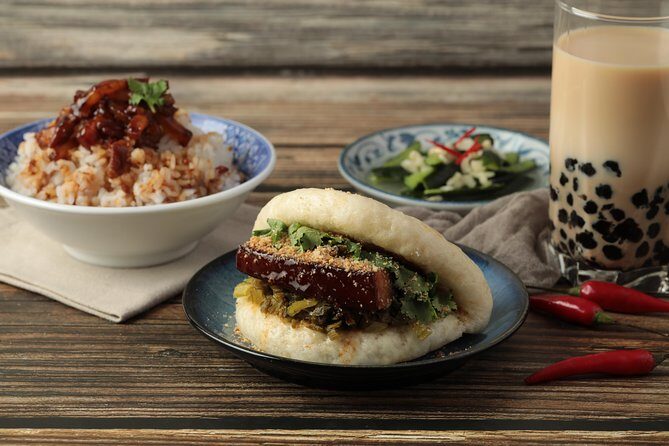
- Small group (max 8) means you get real attention while cooking, not just a lecture
- Gua bao from scratch includes learning the steam bun part, not just assembling toppings
- Lu rou fan pork-braising tips help you understand the flavor behind Taiwan comfort food
- Boba tea pearls from scratch plus you’ll make your own drink by shaking it
- You eat what you make, so you leave satisfied and not just with leftovers
- Recipe book souvenir gives you something to recreate later at home
Getting Oriented: CookInn Taiwan in Zhongshan
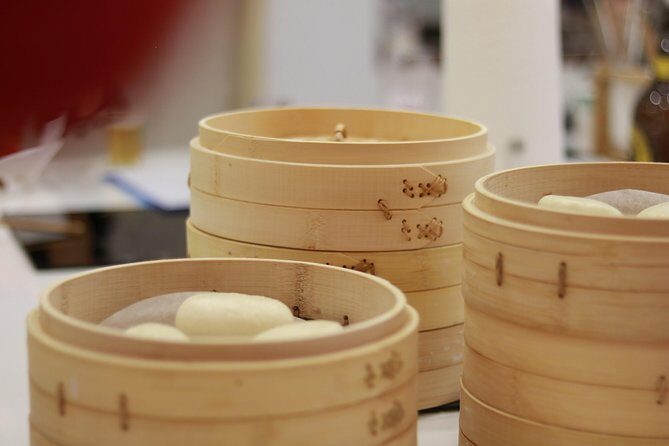
This starts at CookInn Taiwan’s Zhongshan classroom in Datong District, on Chengde Rd. The practical win here is that you begin in a kitchen setup built for teaching. You’re not trying to figure out unfamiliar equipment while also guessing what to do next.
The experience is listed as a mobile-ticket activity, and it runs about two hours, starting at 2:30 pm. So think of it as an afternoon anchor: you arrive hungry, you cook, and you end back where you started. If your Taipei plan includes night markets later, this class can be a great earlier stop—especially because you’ll already understand what you’re seeing when you walk around afterward.
You can also read our reviews of more food & drink experiences in Taipei
What You’ll Cook: Gua Bao, Lu Rou Fan, and Boba Tea
This class centers on xiao chi, the Taiwanese street-food world of small plates and snack-sized favorites. The menu hits three headline items:
Gua Bao: the Taiwanese Hamburger, Bun and All
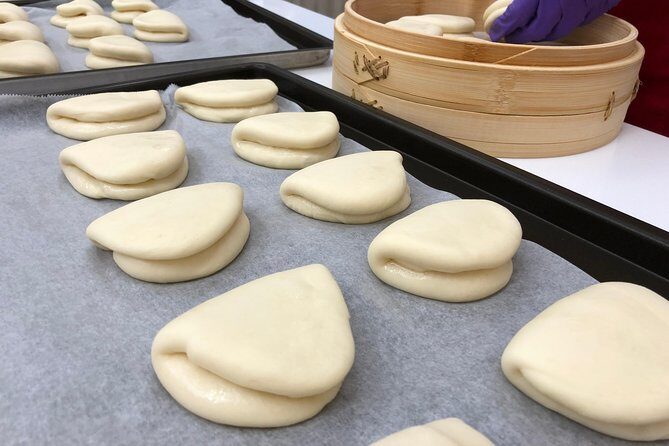
Gua bao is famous for a reason. It’s braised pork belly tucked into a steamed bun that’s soft but not flimsy—plus toppings that balance fat and sweetness with crunch and freshness. In class, you’ll learn how to prepare the steam buns portion, and you’ll also work with the braised pork concept that goes inside.
One detail I really like: you’re not limited to a “final assembly” role. The class teaches the steps behind the dish, so you understand why people keep ordering it. And if gua bao has always felt a bit mysterious when you’ve had it elsewhere, this is the moment it clicks—how the bun texture changes the whole bite.
Lu Rou Fan: Comfort Food With a Braising Mindset
Lu rou fan is the Taiwanese classic of braised pork served over rice. Even if you’ve eaten it before, you’ll learn the guiding idea: pork gets its character from time, heat control, and seasoning layers, not just one sauce packet.
You’ll learn tips to braise classic pork belly. In the class, you’ll end up with a ready-to-eat setup, and you’ll likely assemble it over rice that’s already prepared for you. That matters because it keeps the focus on what you came to learn: the flavor base of the pork.
Bubble Milk Tea: Tapioca Pearls and the Shaking Part
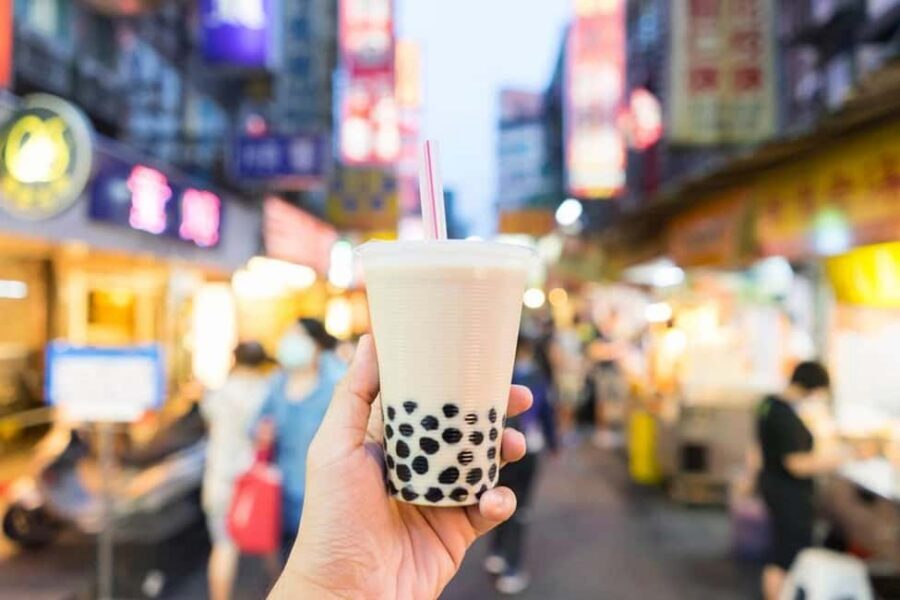
Bubble milk tea gets all the hype for a reason, but the part most people never see is the pearls. Here, you make the chewy tapioca pearls from scratch. That’s not just a fun challenge—it also helps you understand why bubble tea tastes different when the pearls are done right.
After the pearls, you shake your own bubble milk tea. That step sounds small, but it teaches the drink’s texture rhythm: the balance of sweetness, milk, and the chewy pearls that should feel consistent, not watery.
A few more Taipei tours and experiences worth a look
The Class Flow: From Instruction to Your Own Finished Meal
This is set up so you learn in the same order a home cook would. You start with instruction, then you cook, then you plate and eat.
A good sign is that the class keeps you busy the whole time. You’re not left waiting around while someone else does the hard parts. You’ll work on bun prep for gua bao, pork braising steps for lu rou fan, and tapioca pearl making for boba tea. By the end, you sit down and enjoy the meal you made.
I also like the “come hungry” angle. If you try to arrive after a big late lunch, you’ll miss the point. The class rewards your appetite because the food is the result of the work—not just a small snack.
Small-Group Attention (Max 8): Why It Changes Everything
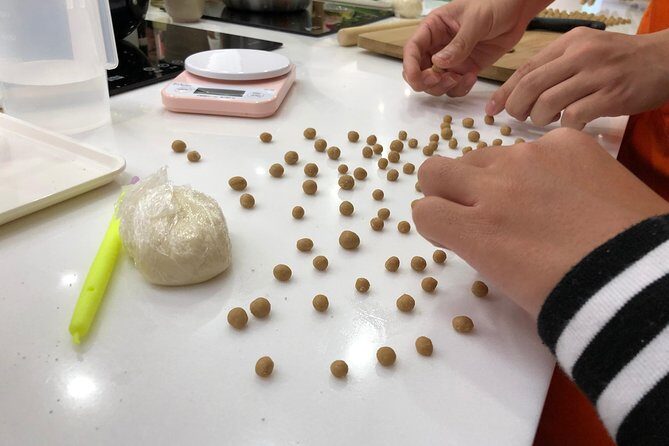
A maximum of 8 travelers is a big deal in cooking classes. With fewer people, you get closer supervision and faster corrections. That’s especially helpful when you’re working with dough textures and timing-sensitive items like pearls and buns.
It also affects how comfortable the class feels. You can ask a question, get a real answer, and adjust your technique before you fall behind. This kind of setup is the reason people come out feeling confident—not just impressed.
I also noticed something practical: the teaching style is friendly and step-by-step. In one experience with kids, the instructor was patient with children aged 8, 10, and 11 and got them involved in the process. That tells me the class is built to teach, not just to entertain.
Your Instructor Impact: Friendly Guidance You Can Follow
One name that shows up in the experiences is Angela. The vibe described around her is clear: she’s capable, friendly, and focused on making steps understandable.
That matters because Taiwanese street food has a few “it’s not complicated, but it is precise” moments. Boba pearls can be tricky if you treat them like normal starch. Steam bun texture can change with handling. Braising needs patience and the right feel for the process.
When your instructor is calm and helpful, you stop guessing. Instead, you follow cues and learn how to fix small mistakes in real time. That’s how you take home more than a memory—you take home technique.
Price and Value: What $79 Buys in Real Cooking Skills
$79 per person for a roughly 2-hour, small-group cooking class is not the cheapest thing you can do in Taipei. But it’s also not “just pay for food.”
Here’s what you’re actually buying:
- Hands-on cooking of multiple dishes, not one
- Instruction that helps you understand how street food works
- A full meal at the end, including drinks
- A recipe book souvenir you can use later
- A group size capped at 8, which improves teaching time per person
If you price this like an individual meal, you’re probably spending less. But if you price it like a skill-building experience—dough, braising, and boba pearls—$79 starts to make sense. You’re paying for the kitchen access, the teaching, and the structured time to practice multiple things.
If you want one activity in Taipei that feels productive and satisfying at the same time, this is a strong contender.
The End Result: A Meal That Feels Like Taipei
There’s a difference between tasting Taiwanese street food and understanding it. This class pushes you toward understanding.
When you sit down at the end, you’re eating:
- Gua bao you made, with that balanced street-food bite
- Lu rou fan with braised pork flavor you learned how to build
- Boba tea with pearls you made, plus your own shaken drink
One highlight from people’s experiences is that the gua bao often becomes the favorite. That tracks. It’s the dish where you notice changes immediately—bun softness, pork richness, and the whole street-food assembly in one bite.
And because the meal is part of the class, you don’t need to hunt for dinner afterward. You can plan the rest of your day without stress.
Who Should Book This Class (And Who Might Skip It)
This fits best if you want:
- Hands-on cooking, not just a food walk
- Multiple Taiwanese street-food items in one session
- A small group experience where you can ask questions
- A souvenir recipe book you’ll actually use
You might skip it if:
- You’re the type who wants lots of wandering time during the afternoon
- You prefer tasting-only experiences over cooking
- You’re expecting a super long workshop. Two hours is enough to learn and finish, but it’s still a sprint.
Quick Tips Before You Go
- Come with a hungry stomach. You’ll eat what you make.
- Wear something comfortable for cooking and kitchen work.
- If you’re nervous about dough or pearls, good. That’s the point—you get guidance through the tricky parts.
- If you love bubble tea, treat the pearls like the main event. That’s where the learning really happens.
Should You Book This Street Food Cooking Class in Taipei?
Yes, if you want a high-value Taipei food experience that teaches you real technique. It’s one of those rare activities where the time spent cooking directly turns into a meal you can enjoy right away, plus a recipe book you can take home.
Book it if you’re excited about gua bao, lu rou fan, and boba tea, and you like the idea of learning the steps behind the flavors you already love. Skip it if you’re strictly in “taste and wander” mode, because this class is about doing—not just sampling.
FAQ
FAQ
How long is the street food cooking class in Taipei?
The class runs for about 2 hours.
Where is the meeting point?
You meet at CookInn Taiwan (Zhongshan 教室), located at 103, Zhongshan教室, Datong District, Section 1, Chengde Rd, 66號2樓, Taipei City.
What time does the class start?
The start time is 2:30 pm.
How much does it cost?
The price is $79.00 per person.
What dishes will I learn to make?
You’ll make gua bao, lu rou fan, and bubble milk tea, including learning steps like steaming bun preparation, braising pork belly, and making tapioca pearls.
Is it a small group class?
Yes. The class has a maximum of 8 travelers.
Do I get to eat during the experience?
Yes. You’ll end the class by sitting down to enjoy the meal you’ve prepared.
What cooking skills are included?
The class includes learning how to prepare the steam buns for gua bao, get tips for braising classic pork belly, make tapioca pearls from scratch, and shake your own bubble milk tea.
Do I receive anything to take home?
You’ll receive a recipe book that can be used as a souvenir.
Is free cancellation available?
Yes, free cancellation is available. You can cancel up to 24 hours in advance for a full refund.
What if the minimum number of travelers isn’t met?
If the experience is canceled because the minimum isn’t met, you’ll be offered a different date/experience or a full refund.