REVIEW · KAOHSIUNG
Discover Scuba Diving With Sea Turtles – Xiaoliuqiu, Taiwan
Book on Viator →Operated by Snap Dive · Bookable on Viator
First time under water can feel scary. This 2-hour Xiaoliuqiu scuba experience is built for comfort, with sea turtle sightings and one-on-one instructor time. The main thing to plan for is that ocean conditions matter—visibility may not always be crystal clear, even if the experience still feels magical.
I also like that you do not need prior certification or swimming skills. You’ll practice a few basics in shallow water first, then go out under direct supervision in a small group that keeps attention on you.
Bring a swimsuit and show up ready to move. The format is simple, the gear is handled for you, and underwater photography is included so you don’t have to fight a camera while you’re learning.
In This Review
- Key highlights to know before you go
- Xiaoliuqiu’s sea turtles: why this scuba session is worth the trip
- What your first 2 hours look like (and why it feels manageable)
- Getting kitted out: equipment, tank, and instructor attention
- The underwater lineup: turtles plus reef life you can actually spot
- Underwater photos included: how the picture value changes the day
- Meeting point in Liuqiu and how to plan your timing
- Who this is best for (and who should think twice)
- Price and value: is $83 a fair deal?
- Tips to make your session smoother (so you enjoy it more)
- Should you book this turtle scuba session?
- FAQ
- Do I need scuba certification or swimming skills?
- What’s included in the price?
- How long is the activity?
- What should I bring?
- What animals might I see underwater?
- How big is the group?
- Is transportation included?
- What if weather is poor?
Key highlights to know before you go
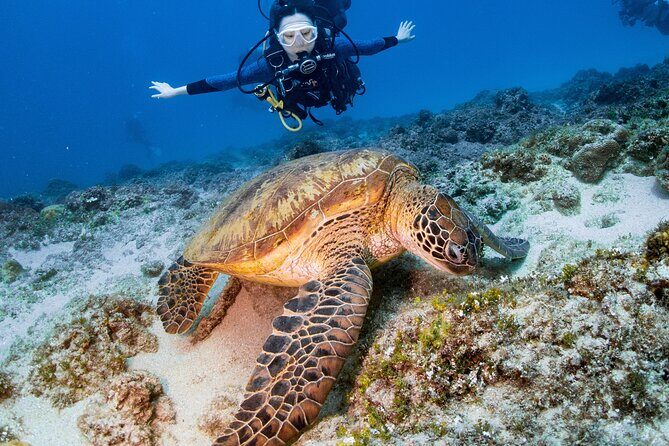
- Green sea turtle focus in Xiaoliuqiu’s waters, where the operator targets frequent close encounters
- No certification required and beginner-friendly practice in shallow water
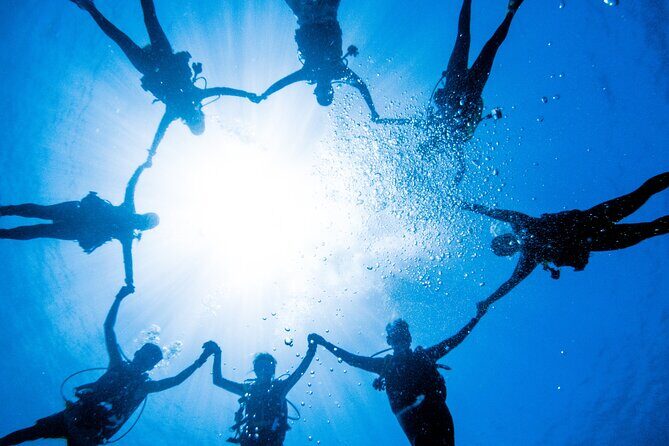
- Small group size (maximum 10 travelers) with an instructor for each diver
- Full scuba gear provided, including a tank (cylinder)
- Underwater photos included, so you leave with proof without extra hassle
Xiaoliuqiu’s sea turtles: why this scuba session is worth the trip
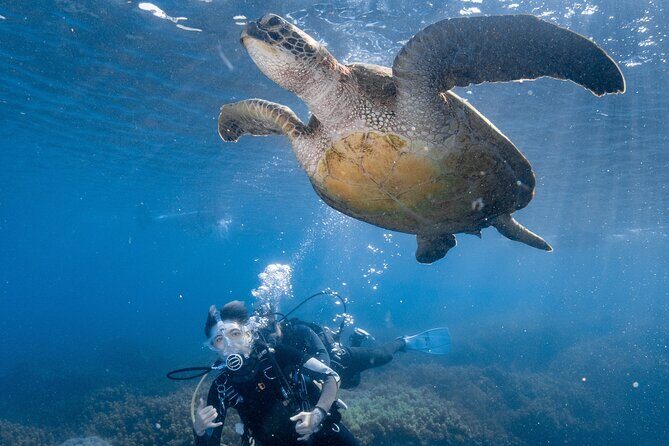
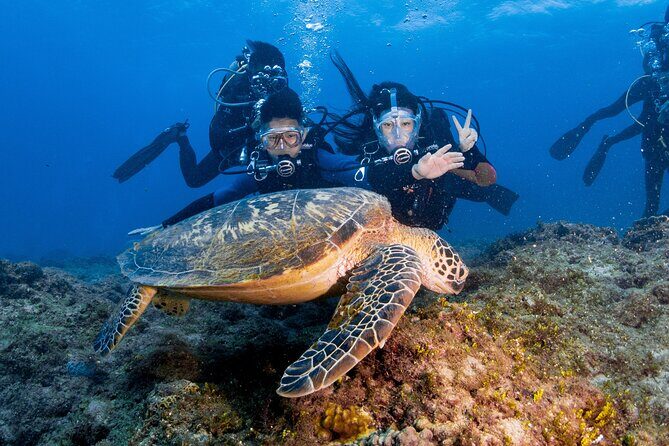
If you’ve ever wanted that moment where a sea turtle looks you in the face, Xiaoliuqiu is one of the places where that idea turns into a real plan. The operator specifically markets this area as having a very high concentration of green sea turtles, and that turtle focus is what shapes the whole experience.
This matters because “turtle watching” can be vague. Here, the activity is structured around going underwater to see turtles up close, along with other reef life you might spot in the same waterway. You’re also in a region where the Pacific water moves through the Bashi Channel, which helps explain why marine life can be so plentiful on the sessions they run.
Now, a practical note: animal sightings are never guaranteed the way a museum exhibit is. Still, when an operator builds an activity around a specific species and chooses a specific local site type, you’re usually getting a better shot than a general, all-purpose excursion.
For me, the best value comes from the combination of targeted location plus beginner support. You’re not paying for a long, complicated training program. You’re paying for a short, guided underwater session where your comfort and your camera-worthy moments are both part of the package.
You can also read our reviews of more scuba diving tours in Kaohsiung

What your first 2 hours look like (and why it feels manageable)
This runs about 2 hours total, and that timeframe is perfect for a first scuba try. Long experiences can feel like a “wait and hope” situation. A shorter schedule keeps the day from dragging, and it also reduces the chance that nerves build while you’re waiting.
The experience starts with basics: you’ll learn basic safety guidelines and required skills under the supervision of a scuba professional. The goal isn’t certification—it’s practical competence so you can breathe underwater safely and comfortably.
You’ll also do some skills practice in shallow water before you go further. That step is a big deal for beginners. It helps you get your bearings fast, learn how your body reacts, and reduce the fear factor before you’re in deeper, open water.
Then comes the underwater part, guided closely. The program is described as giving you the one-and-only priority of your diving instructor. In real-world terms, that means you’re less likely to get lost in a crowd, and more likely to get quick corrections when something feels off.
So what should you expect to feel? Usually it’s a mix of focus and surprise. Once you’re through the first learning curve, you can start looking around. And that’s when the turtle encounters tend to happen—because you finally have the mental bandwidth to watch what’s in front of you, not just what’s happening to your gear.
Getting kitted out: equipment, tank, and instructor attention
One of the most practical parts of this experience is that you don’t have to source anything. You’re provided with full scuba equipment plus a cylinder (tank). That’s a big value line because renting gear or figuring out sizing on your own can easily turn a fun day into logistical stress.
You also get an instructor for each diver. That “small, supported” design is exactly what you want if you’re new. It’s not just about safety; it’s about learning faster.
Here’s the key detail that beginners tend to care about: you don’t need lungs/breathing issues, ongoing problems related to past surgery, or eye/ear/nasal/sinus concerns. The program also lists that you should not struggle to do moderate exercise. Those are not random rules. They’re how operators reduce risk when they’re asking your body to handle the breathing and pressure changes involved in scuba.
Also, you’ll need your own swimsuit. That’s the one prep item you can’t skip. Pack a swimsuit you’re comfortable in for a short lesson and a short underwater session—something easy to rinse and dry afterward.
Between the provided gear and the close instruction, this is a good fit if you want the sensation of underwater breathing without the long prep that certification requires.
The underwater lineup: turtles plus reef life you can actually spot
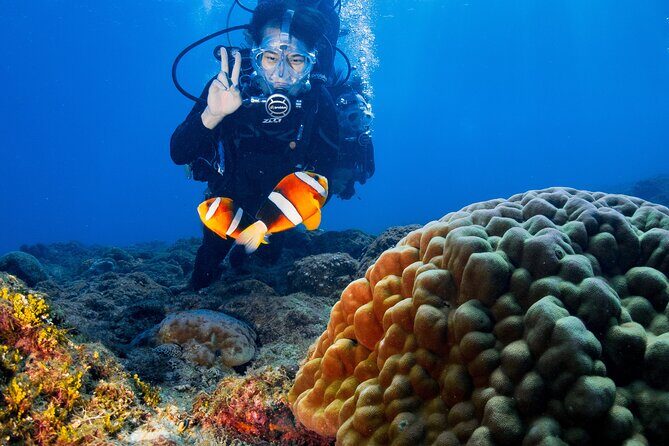
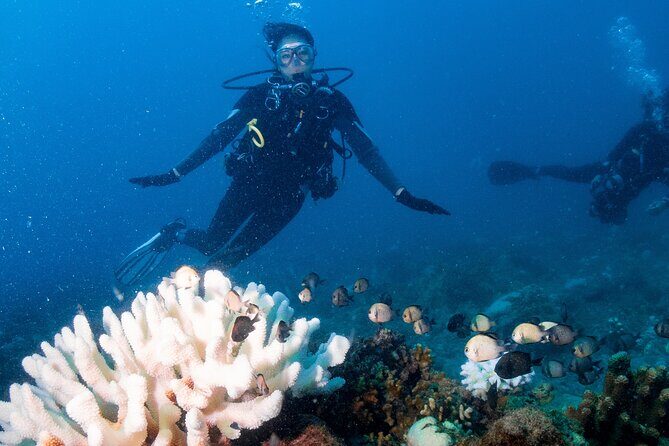
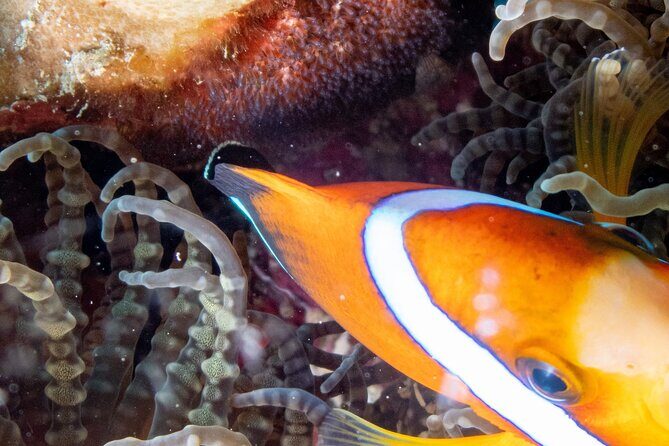
The whole pitch is green sea turtles, and that’s the headline you’re booking for. But the reason I think this is a stronger experience than “just see one turtle” is that the program also names other reef creatures you might encounter in the same area.
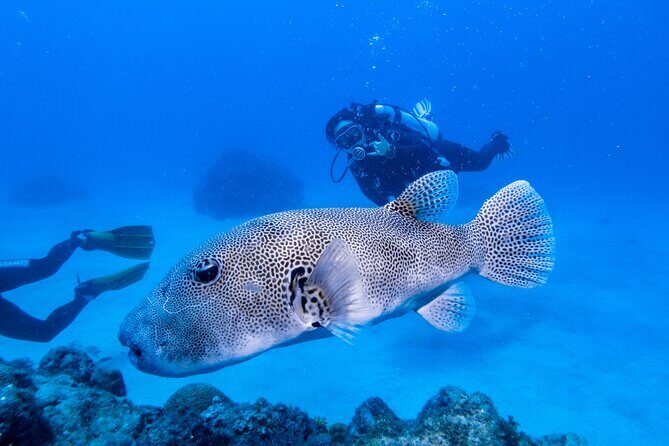
The experience description includes the chance to see:
- turtles
- puffers
- eels
- Pacific octopus
- sponge reefs
Even if you don’t spot every species, the range makes the session feel like a living aquarium, not a one-note search. When visibility shifts, you can still watch for movement and shapes. Octopus behavior and eel movement can be easier to notice once you’re calm enough to scan slowly.
And those turtle encounters? They tend to be the moments you remember later—because you get that close-up scale that snorkel-only trips often can’t match. That’s also where learning to hold your breathing and follow cues becomes important. In one of the feedback summaries, the difference between good photos and even better photos came down to remembering to do what they told you about breath timing.
So my practical advice for you: don’t treat the instruction as background. If they repeat a cue, it’s because it affects how smoothly you float, how you move through the water, and how clearly you can look around.
Underwater photos included: how the picture value changes the day
A lot of first-time underwater experiences fail in one simple way: you’re trying to learn, and your hands are busy managing gear, not taking photos. Here, underwater photography is included, which changes the entire payoff.
What this means for your day:
- You don’t have to bring and manage an underwater camera setup.
- You can focus on breathing, buoyancy, and watching rather than fiddling.
- You can leave with images that match the moments you came for—turtles close by.
The feedback also highlights that even when visibility wasn’t perfect, the photos and videos still came out great. That tells you the team is used to working with changing sea conditions, which is a real advantage in the real world.
If you’re worried about getting usable photos while you’re learning, this is one of the best features in the entire offering. It turns the experience into something you can share without needing to be a photographer.





Meeting point in Liuqiu and how to plan your timing
This starts at No. 90-2, Lane 1, Zhongzheng Rd, Liuqiu Township, Pingtung County, Taiwan 929, and the activity ends back at the same meeting point. Opening hours are listed as 8:00 AM to 5:00 PM, seven days a week, during the stated operating window.
Private transportation is not included, so you’ll want to handle getting there on your own. Practically, I’d plan to arrive a bit early, especially if it’s your first time finding the exact address on the island.
Because the experience runs about 2 hours, the day is easier to schedule than longer scuba outings. You’re not signing up for a half-day of uncertainty. You can pair it with other Xiaoliuqiu activities—just give yourself a reasonable buffer afterward for rinsing gear, drying off, and settling your body.
Also, the group size is capped at 10 travelers, and the operator description notes confirmation within 48 hours of booking (based on availability). That’s enough detail to set expectations: you’ll want flexibility in your schedule, but you’re not left in total limbo.
Who this is best for (and who should think twice)
This is designed for beginners. The program says no swimming skills or certification are required, and the practice happens in shallow water before you go further. If you’ve never done scuba before, this structure usually makes the learning curve feel shorter.
It’s also a strong fit if you want a focused experience rather than a day of classes. You learn basic safety and skills, then you go underwater under close supervision.
Who should think twice:
- If you have issues listed as disqualifying (lungs/breathing concerns, relevant surgery history, eye/ear/nasal/sinus problems), don’t force it. These are explicitly listed for a reason.
- If you can’t handle moderate exercise, this may not be the right fit.
Age-wise, it’s listed for 10 years and above. That can make it a fun family activity if the child is comfortable following instructions and can meet the listed physical requirements.
If you’re the kind of traveler who loves animals and wants the best odds of seeing turtles up close, this is your kind of outing. If you’re looking for a technical training program or a certification course, this isn’t that. It’s an experience built for a single goal: safe, guided time underwater with marine life.
Price and value: is $83 a fair deal?
At $83 per person for an approx. 2-hour session, the value depends on what you’d otherwise pay for the big components: equipment rental, instruction, and the final payoff (photos).
Here you get:
- full scuba equipment and tank
- an instructor for each diver
- underwater photography included
- all fees and taxes
Private transportation is not included, but that’s common for island activities. The pricing structure looks like it’s designed to remove the hidden costs that often surprise first-time scuba goers.
I think $83 is strongest if you’re new and you don’t want to spend time figuring out gear and logistics. If you already own scuba gear and know you’ll guide yourself, then a basic “guided only” session might feel more expensive. But for first-timers, the combination of gear + close instruction + photos is exactly what you’re paying for.
Also, this is commonly booked about 18 days in advance on average. That’s a sign that the slots fill for a reason—this turtle-and-beginner format is in demand.
Tips to make your session smoother (so you enjoy it more)
You’ll get cues from the instructor, but here are a few practical moves that align with the way these sessions run:
- Listen for the breath timing cues. One piece of feedback noted that photos and videos could have been even better if they remembered to hold their breath the way they were told. That’s not just about photos; it’s about staying coordinated and comfortable.
- Arrive rested. If you’re tired or stressed, your body is less likely to relax into the breathing rhythm.
- Bring a comfortable swimsuit. You need it, and you don’t want to waste energy dealing with discomfort before the session starts.
- Go into it expecting learning, not perfection. Your first goal is confidence. Your second goal is to look around slowly and let the animals come to you.
If you treat the training moments like part of the fun (not a hurdle), you’ll enjoy the underwater part more.
Should you book this turtle scuba session?
Book it if you want a beginner-friendly scuba experience that targets green sea turtles in Xiaoliuqiu, includes full equipment, and hands you photos on the way out. It’s especially worth it if you don’t want to plan gear rentals or manage a camera while you’re learning.
Pass on it if you’re seeking a certification course or if you know you don’t meet the physical/medical guidelines listed (lungs/breathing, relevant surgery history, and eye/ear/nasal/sinus concerns). Also, consider the weather factor: it’s stated that the experience needs good weather, and if conditions are poor you’ll be offered a different date or a full refund.
If you’re on the fence, here’s my simple decision rule: if you can meet the listed requirements and you’d rather pay for guided comfort than DIY complexity, this is a smart, value-focused way to see Xiaoliuqiu’s turtles up close.
FAQ
Do I need scuba certification or swimming skills?
No. The experience is designed for first-time divers and says that no swimming skills or certification are required. You’ll learn basic safety guidelines and skills with shallow-water practice.
What’s included in the price?
Use of full scuba equipment and a cylinder (tank), along with an instructor for each diver. Underwater photography is also included, and all fees and taxes are covered.
How long is the activity?
It’s listed as approximately 2 hours total.
What should I bring?
You’ll need to bring your own swimsuit. Everything else (scuba equipment and the tank) is provided.
What animals might I see underwater?
The program describes the chance to encounter green sea turtles plus other marine life like puffers, eels, Pacific octopus, and sponge reefs.
How big is the group?
The maximum group size is listed as 10 travelers.
Is transportation included?
Private transportation is not included, so you’ll need to arrange how you get to the meeting point.
What if weather is poor?
The experience requires good weather. If it’s canceled due to poor weather, you’ll be offered a different date or a full refund.